
How to Unclog Toilet Without Plunger
A clogged toilet and no plunger is one of the most stressful household situations you can find yourself in, particularly when you have guests, when it is the only bathroom, or when it is happening right now at eleven o’clock at night.
The good news is that most toilet clogs are soft organic blockages, paper and waste, that respond well to methods that do not require a plunger. The better news is that you probably have everything you need in your kitchen and bathroom right now.
This guide covers seven proven methods for clearing a toilet clog without a plunger, organized from the simplest and safest to try first to the more involved options for stubborn blockages. Each method comes with clear instructions and an honest assessment of when it works and when it does not.
Unclogging a toilet without a plunger means using alternative methods, typically involving household liquids, heat, dish soap, or improvised tools, to dislodge or dissolve a blockage in the toilet trap or drain pipe. Most household toilet clogs are soft organic blockages that respond to these methods within twenty to thirty minutes. Harder blockages involving non-flushable objects may require a toilet auger or professional help.
Quick Summary
Most toilet clogs can be cleared without a plunger using dish soap and hot water, baking soda and vinegar, or a homemade wire snake. Start with dish soap and hot water as your first method. If that does not work after twenty minutes, try baking soda and vinegar. If nothing works after several attempts, stop and call a plumber to avoid making the blockage worse.
Before You Start: Stop the Overflow First
Before trying any method, there is one critical first step that most people skip and then regret. If the toilet bowl is full to the rim or threatening to overflow, shut off the water supply before doing anything else.
The shut-off valve is the oval-shaped valve on the wall or floor behind the toilet. Turn it clockwise to stop water flow. This prevents an overflowing toilet from flooding your bathroom floor while you work on clearing the clog.
If the bowl is already very full, remove some water by bailing it into a bucket with a disposable cup before starting. You want the bowl about half full so that adding liquid has room to work without causing overflow.
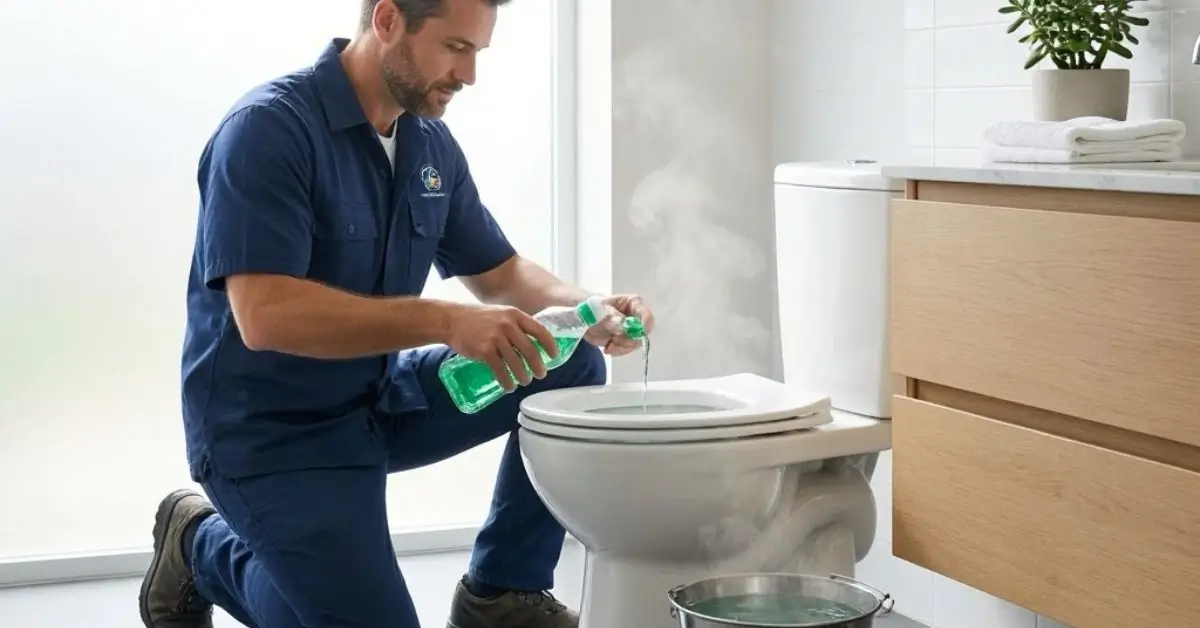
Method 1: Dish Soap and Hot Water
This is the first method to try for almost every soft organic toilet clog. It is safe, effective, and uses items everyone has at home.
Why it works
Dish soap is a surfactant. It reduces friction between the clog and the pipe surface, lubricating the blockage so it slides through more easily. Hot water adds downward pressure and helps break up soft organic material. Together they resolve most standard toilet clogs without any mechanical force.
What you need
- 1/2 cup of liquid dish soap
- A bucket of hot water (not boiling, hot tap water is fine)
How to do it
Step 1: Squeeze half a cup of dish soap directly into the toilet bowl. Allow it to sit for five to ten minutes so it can work its way down toward the clog.
Step 2: While the soap sits, fill a bucket with hot water from your bathroom tap. The water should be as hot as the tap produces. Do not use boiling water from the kettle as this can crack the porcelain.
Step 3: Pour the hot water into the bowl from waist height. Pouring from height creates water pressure that pushes the soap toward the clog and adds force to the process.
Step 4: Wait ten to fifteen minutes. The soap is lubricating the blockage and the heat is helping break it down.
Step 5: Flush. In most cases of standard soft clogs, the toilet will flush successfully. If not, repeat the process once more before moving to the next method.
Effectiveness: High for soft organic clogs. This method alone resolves the majority of standard household toilet clogs.
Method 2: Baking Soda and Vinegar
This method works through a chemical reaction that creates carbonation and gentle pressure within the drain. It is particularly effective when combined with a period of waiting.
Why it works
Baking soda is a base. White vinegar is an acid. When they combine, they produce carbon dioxide gas and water. The fizzing action agitates the clog and the chemical activity helps break down organic material. It is not as aggressive as commercial drain cleaners but it is far safer for your pipes and the environment.
What you need
- 1 cup of baking soda
- 2 cups of white vinegar
- Hot water
How to do it
Step 1: Make sure the bowl is not overfull. Remove water if needed so there is room for the fizzing reaction without overflow.
Step 2: Pour one cup of baking soda directly into the bowl.
Step 3: Slowly pour two cups of white vinegar into the bowl. Pour slowly to control the fizzing reaction and prevent it from bubbling over the rim.
Step 4: Allow the mixture to sit for twenty to thirty minutes. The longer you can leave it, the more effectively it works on the blockage.
Step 5: Pour a bucket of hot water into the bowl from waist height to flush the loosened material through.
Step 6: Attempt a flush. If the drain moves slowly, repeat the process once more before moving to another method.
Method 3: Hot Water Alone
If you do not have dish soap or baking soda readily available, hot water alone is worth trying as an immediate first step. Hot water softens and breaks down organic blockages, and the volume and pressure of water from height can physically push a soft clog through.
Fill a large bucket with the hottest water your tap produces and pour it into the bowl from waist height. The combination of heat, volume, and water pressure from the height of the pour replicates some of what a plunger achieves mechanically. Repeat this two or three times before concluding it is not working.
Method 4: Plastic Wrap Seal Method
This is a less-known method that uses air pressure instead of mechanical plunging.
Why it works
Sealing the toilet bowl with plastic wrap and then pressing down on it creates a air pressure system that pushes the clog downward through the pipe.
What you need
- Plastic wrap or a trash bag
How to do it
Step 1: Dry the toilet rim thoroughly with a cloth so the plastic wrap will seal against it.
Step 2: Cover the entire bowl opening with two or three layers of plastic wrap, pressing firmly around the rim to create a seal.
Step 3: Flush the toilet. The water pressure from the flush will push the plastic wrap upward into a dome shape.
Step 4: Press down firmly on the dome with your hands. This creates downward air pressure that pushes the blockage through the drain.
Repeat two or three times. This works best for relatively minor clogs where the blockage is not firmly compacted.
Method 5: Dish Soap and Warm Water Combination With Waiting
A variation on Method 1 that works better for more stubborn clogs by extending the contact time.
Add a generous pour of dish soap, cover the bowl, and leave it for thirty minutes to an hour. The soap will continue working its way toward the clog over this extended period. Then add hot water and attempt to flush. This extended soaking version works on clogs that the five-minute version could not shift.
Method 6: Homemade Wire Snake
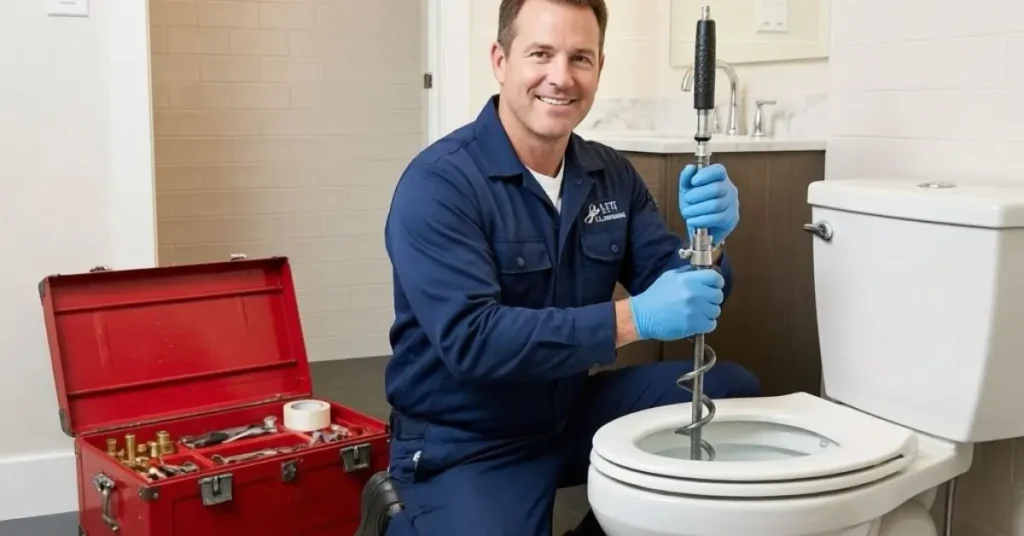
If liquid methods have not worked after several attempts, the blockage may be more solid than typical organic material, or it may be positioned where liquid pressure cannot reach it effectively. A homemade wire snake can reach and physically dislodge the blockage.
What you need
- A wire coat hanger
How to do it
Step 1: Unwind the coat hanger to create a straight length of wire with a small hook at one end.
Step 2: Wrap the hooked end in a small piece of cloth secured with tape or a rubber band. This protects the porcelain surface of the toilet from scratches.
Step 3: Insert the wire into the drain opening and work it gently into the pipe, rotating as you push.
Step 4: When you feel resistance, work the wire back and forth to break up or hook the blockage.
Step 5: Withdraw the wire and attempt to flush.
This method is more effective for solid blockages or objects that have partially entered the drain but are not fully through. Be gentle to avoid pushing the blockage further into the pipe.
Method 7: Enzyme-Based Drain Treatment
If the clog is not urgent, enzyme-based drain products designed for toilet use can dissolve organic blockages over several hours.
These products use natural enzymes and bacteria to break down waste material without harsh chemicals. They are safe for pipes, septic systems, and the environment. Pour the product into the bowl according to package instructions and allow it to work overnight for best results.
This is not a method for immediate emergencies but is a reliable approach when time allows and when other methods have partially softened the clog.
Comparison of Methods
| Method | Works Best For | Time Required | Effectiveness |
|---|---|---|---|
| Dish soap and hot water | Standard soft clogs | 20 to 30 minutes | Very high |
| Baking soda and vinegar | Organic buildup clogs | 30 to 45 minutes | High |
| Hot water alone | Minor fresh clogs | 15 minutes | Moderate |
| Plastic wrap pressure | Light clogs | 10 minutes | Moderate |
| Wire coat hanger | Solid or partial blockages | 20 minutes | High for solid clogs |
| Enzyme treatment | Organic clogs, overnight | 6 to 12 hours | High with time |
What NOT to Do
Do not use boiling water
Boiling water can crack porcelain. Use the hottest water your tap produces, not water from a kettle.
Do not use chemical drain cleaners designed for sink drains
Products like Drano are not designed for toilet use and can damage the rubber components inside the toilet and the pipe connections. Use only products specifically labeled for toilet drain use.
Do not flush repeatedly when the bowl is full
Flushing a toilet that is already full adds more water to a bowl that cannot drain, causing overflow and a much worse situation to clean up.
Do not push non-flushable objects further into the pipe
If the clog was caused by a non-flushable object like a toy or a wipe, pushing it further into the pipe with a wire or pressure may move it to a location where removal requires professional help. Retrieve non-flushable items rather than forcing them through.
When to Stop and Call a Plumber
These home methods work reliably for standard soft organic clogs. Stop attempting home remedies and call a plumber when:
- Multiple methods have failed after genuine attempts
- The blockage appears to involve a solid non-flushable object that is lodged
- More than one drain in the home is backing up simultaneously, which indicates a main line blockage
- You can hear gurgling from other drains when the toilet is flushed
- The toilet has been partially clogged repeatedly over recent weeks, suggesting a developing drain issue
Main line blockages, tree root intrusion, and structural pipe problems all require professional equipment and expertise that household methods cannot address.
Conclusion
A clogged toilet without a plunger is a solvable problem in most cases. Dish soap and hot water resolve the majority of standard household clogs. Baking soda and vinegar handle more stubborn organic blockages. A wire coat hanger reaches solid material that liquids cannot shift.
Work through the methods in order, give each one adequate time to work, and avoid the mistakes that make the situation worse. In most cases, one of these methods will resolve the problem within an hour using only what you have at home.
If you found this guide useful, take a look at our related articles on how to prevent common toilet clogs and what to do when a toilet keeps clogging. Both give you the preventive and diagnostic knowledge to handle toilet issues confidently going forward.
Frequently Asked Questions
How do you unclog a toilet without a plunger fast?
Pour half a cup of dish soap into the bowl, wait five to ten minutes, then add a bucket of hot tap water from waist height. Most soft clogs clear within twenty to thirty minutes using this method alone.
Does dish soap actually work?
Yes. Dish soap lubricates the blockage, reducing friction between the clog and pipe walls so it slides through more easily. Combined with hot water, it resolves most standard household toilet clogs reliably.
Does baking soda and vinegar unclog a toilet?
Yes, for organic soft clogs. The fizzing reaction breaks down material and creates agitation in the drain. It takes longer than dish soap but works well for buildup-related blockages rather than fresh single clogs.
Can you leave a clogged toilet overnight?
Yes, if there is no overflow risk and another bathroom is available. Adding dish soap or an enzyme treatment overnight increases contact time and gives the material more chance to break down naturally.
What causes most toilet clogs?
Too much toilet paper at once or thick quilted paper that does not dissolve quickly. Flushing wet wipes, facial tissues, and paper towels is the second most common cause.