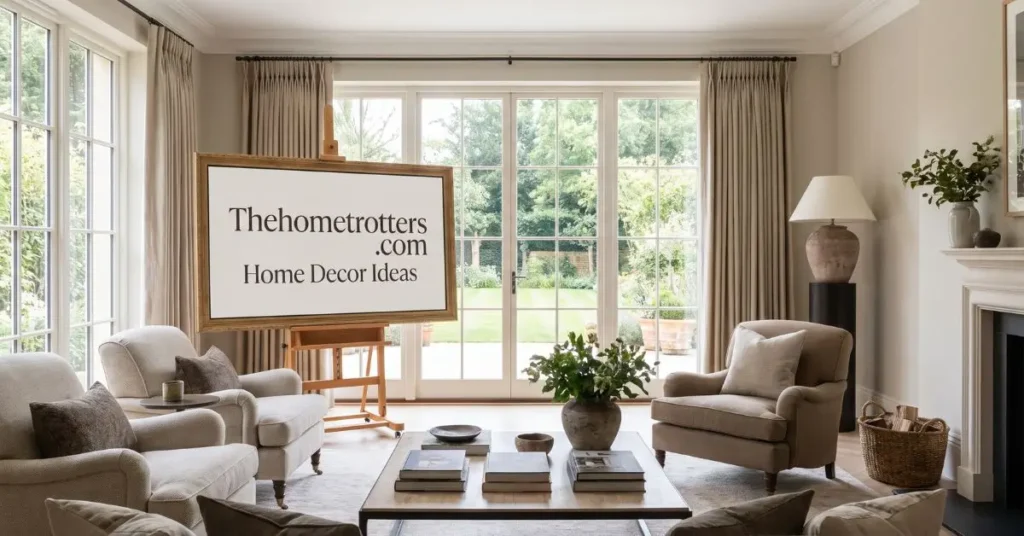


Home Trotters Home Ideas: A Complete Practical Guide to Improving Every Room
Home improvement inspiration is everywhere. The problem is that most of it shows you what a finished room looks like without telling you how to get there from where you actually are right now.
You end up with a Pinterest board full of beautiful rooms that do not look anything like your home, a vague feeling that your space could be better, and no clear starting point for making it happen.
The Home Trotters approach to home ideas addresses exactly that frustration. Rather than presenting idealized spaces that require unlimited budgets or professional designers, it offers grounded, practical improvement ideas that work in real homes for real people at different budget levels.
This guide brings those ideas together in one place, organized room by room with enough practical detail that you can start making genuine improvements rather than just collecting more inspiration you cannot use.
Home Trotters home ideas refer to a practical collection of home improvement and interior styling concepts built around making living spaces more comfortable, functional, and personally expressive. The approach combines accessible design principles with honest budget reality, offering room-specific ideas that work across different home sizes and styles, always prioritizing how a space actually lives over how it looks in a staged photograph.
Quick Summary
Home Trotters home ideas are practical, room-by-room improvement concepts that balance good design with real-world budgets and lifestyles. This guide covers the best ideas for every major room in your home, what each costs in realistic terms, and how to start making improvements that actually last and feel right to live with.
What the Home Trotters Approach Is Built On
Understanding the philosophy behind Home Trotters home ideas makes every specific recommendation more useful because you can apply the thinking, not just the tip.
The approach is built on the belief that a well-designed home is not defined by how much was spent on it. It is defined by how intentional the decisions were. A $30 throw pillow chosen deliberately to complement existing colors and textures does more for a room than a $300 decorative object bought impulsively because it looked good on a shelf in a store.
Three principles run through every Home Trotters home idea.
Comfort before aesthetics. A room that looks good but does not feel good to be in has failed at its primary job. The right temperature of light, the right arrangement of furniture for actual conversation and use, the right amount of storage so surfaces stay clear: these functional qualities are what make a room genuinely livable.
Layers over statements. Single statement pieces rarely transform a room. Layers of texture, color, light, and material build up into something that feels complete and interesting without any single element having to carry all the weight.
Progress over perfection. A room improved incrementally over time with care and intention almost always feels better than one renovated quickly and completely in a single push. Patience with the process is part of the approach.
Living Room Ideas That Change How the Space Feels
The living room is where most people want to start because it is the room that defines how a home feels to everyone who enters it.
Fix the Furniture Layout Before Anything Else
The most impactful living room improvement available costs nothing. Move your furniture.
Most living rooms are arranged with all pieces pushed against the walls, which creates a formal, disconnected quality that works against the comfort and conversation a living room should encourage. Floating the sofa away from the wall and grouping seating pieces to face each other immediately changes how a room feels to be in.
A homeowner in Minneapolis who made this single change reported that the room immediately felt more like a place people wanted to sit and talk rather than a room they passed through. That kind of shift from a zero-cost layout change is realistic and repeatable.
Layer Your Lighting Sources
Home Trotters home ideas return to lighting more consistently than almost any other topic, because lighting has more effect on how a room feels than almost any other single element.
The problem in most living rooms is a single overhead fixture that provides general illumination but creates no warmth or atmosphere. Supplementing this with floor lamps, table lamps, and ambient sources like candles or LED strip lighting under a sofa table creates the layered lighting quality that makes rooms feel genuinely inviting rather than functional.
Switching all bulbs to warm white tones around 2700K costs under $30 and immediately makes the room feel warmer and more comfortable, especially in the evenings.
Get the Rug Size Right
An undersized rug is one of the most common living room mistakes and one of the easiest to understand once it is pointed out. A small rug floating in the middle of a seating arrangement makes the room feel disconnected and smaller than it actually is.
The right rug size for most living rooms allows all four legs of the sofa and chairs to sit on the rug, or at least the front two legs of each piece. In the US, a 9×12 or 8×10 rug is appropriate for most standard living rooms. When in doubt, go larger rather than smaller.
Bedroom Ideas That Support Rest and Reflect You
The bedroom is the most personal room in any home and the one where thoughtful improvements have the most direct effect on daily wellbeing.
Invest in Bedding Before Furniture
The bed is the visual and functional center of the bedroom, and the bedding is what makes it work. Quality sheets, a properly weighted duvet, and deliberately layered pillows in complementary textures do more for the bedroom experience than almost any furniture upgrade.
Home Trotters home ideas consistently recommend natural fiber bedding, linen and cotton in particular, because it regulates temperature better, feels more comfortable over time, and photographs beautifully even without professional styling.
Neutral foundational bedding with texture added through a throw and two or three accent pillows is the most flexible and consistently successful approach.
Hang Curtains Correctly
Incorrectly hung curtains undermine bedroom design more consistently than almost any other single mistake. Curtains hung just above the window frame and stopping short of the floor make windows look small, ceilings feel low, and rooms feel less finished.
Hanging curtains six to twelve inches above the window frame, as close to the ceiling as the architecture allows, and letting them fall to the floor visually raises the ceiling height and makes windows appear significantly larger. This improvement often only requires moving the curtain rod hardware up, which costs nothing if you already own the curtains.
Create a Intentional Bedside Setup
A well-designed bedside area is one of the details that separates rooms that feel genuinely designed from rooms that just have furniture in them. You need a surface at the right height for the bed, a lighting source that provides adequate reading light without disturbing a sleeping partner, and minimal clutter on the surface itself.
A small tray or dish for nighttime essentials keeps the surface organized. A lamp with a warm bulb at the right height makes reading comfortable. These small functional details add up to a room that feels cared for.
Kitchen Ideas Worth Prioritizing
Kitchens are used multiple times every day, which means even small improvements deliver returns constantly.
Under-Cabinet Lighting First
LED strip lighting under upper kitchen cabinets is consistently one of the highest-return kitchen improvements available for the cost. It illuminates countertops that overhead lights leave in shadow, makes food preparation easier and safer, and adds a warm, finished quality to the kitchen that makes the whole room feel more considered.
Most under-cabinet LED systems cost $100 to $250 for a typical kitchen and can be installed without professional help. This is the kitchen improvement to make before any cosmetic changes.
Replace Hardware Rather Than Cabinets
Full cabinet replacement is one of the most disruptive and expensive kitchen projects available. In most kitchens, new cabinet hardware delivers the majority of the visual improvement at a fraction of the cost.
New handles and pulls in a consistent finish, matte black, brushed nickel, and brushed brass are all strong current choices, change the character of kitchen cabinetry immediately and require only a screwdriver and an afternoon to complete.
Style Countertops and Open Shelves Deliberately
Clear countertops with a few deliberately chosen objects look more designed than crowded ones regardless of how attractive the individual objects are. Keep daily-use appliances on the counter, everything else in storage.
Open shelves follow the same principle. Mix practical items with a few decorative pieces and leave meaningful negative space between objects. The breathing room is what makes shelves look curated rather than cluttered.
Bathroom Improvements with Noticeable Results
| Improvement | Approximate Cost | Impact Level | Notes |
|---|---|---|---|
| New faucet and fixtures | $80 – $300 | High visual | Often DIY-friendly |
| Regrout existing tile | $30 – $120 DIY | High cleanliness | Makes old tile look new |
| Framed mirror upgrade | $50 – $200 | Medium visual | Large impact for low cost |
| Exhaust fan replacement | $60 – $150 | High functional | Prevents moisture damage |
| Updated towel bars and hooks | $40 – $130 | Medium visual | Cohesive finish matters |
| Added floating shelf | $25 – $90 | Medium functional | Storage and styling combined |
These are realistic US market costs for DIY execution. Professional installation adds to each figure but may be necessary depending on the specific improvement and local building requirements.
Entryway Ideas That Make Strong First Impressions
The entryway is the first interior space anyone experiences, which gives it disproportionate influence over how the whole home is perceived.
Three Things Every Entryway Needs
The Home Trotters approach to entry spaces identifies three non-negotiable functional elements: somewhere to sit when removing shoes, somewhere to hang coats and bags, and a surface for keys and everyday carry items.
A narrow bench, three or four hooks at the right heights for different users, and a small console table or floating shelf with a tray address all three needs in even the smallest entry space. Get the function right first and the styling follows naturally.
Add a Mirror for Light and Function
A mirror in the entryway serves double duty. It allows a quick appearance check before leaving, and it reflects light back into a space that is often naturally darker than the rest of the home.
Positioned opposite a window or light source where possible, a mirror with a simple frame in a finish that complements the home’s overall style is one of the best value additions available for any entryway.
Introduce Something Living
A plant in the entryway immediately communicates care and warmth to anyone who enters. It signals that the home is tended to and that life is welcomed inside.
Low-maintenance options like snake plants, ZZ plants, or trailing pothos all thrive in the lower-light conditions typical of most entry spaces. Even a single small plant in a simple pot makes a meaningful difference to how the entry feels.
How to Apply These Ideas Without Feeling Overwhelmed
The most common reason home improvement intentions do not translate into action is that the total scope feels too large to start.
Home Trotters home ideas work best when applied one room at a time, one improvement at a time, in a clear sequence that builds momentum without requiring everything to happen at once.
Start with zero-cost changes in the room that matters most to you. Furniture rearrangement, decluttering, and restyling surfaces cost nothing but often produce the most immediate and visible improvement.
Move next to low-cost changes in the same room: lighting upgrades, a new throw or cushion cover, updated hardware on furniture pieces, a plant. These changes typically cost under $100 and produce significant visual improvement.
Reserve larger investments, flooring, fixtures, countertops, for when you have a clear plan and a dedicated budget. Rushing these decisions consistently produces results that are less satisfying than taking the time to choose correctly.
Conclusion
Home improvement is most satisfying when it is approached as a series of deliberate, well-considered decisions rather than a single rush of activity. The Home Trotters home ideas covered in this guide are built on exactly that principle.
Start with the room that matters most to you. Make one change at a time and notice how it affects the space before adding the next. Layer improvements gradually, from furniture layout to lighting to textiles to larger structural changes when budget and planning allow.
The homes that feel genuinely good to live in are almost always the ones that were built with care rather than speed. Take your time, trust the process, and start with one idea from this guide today.