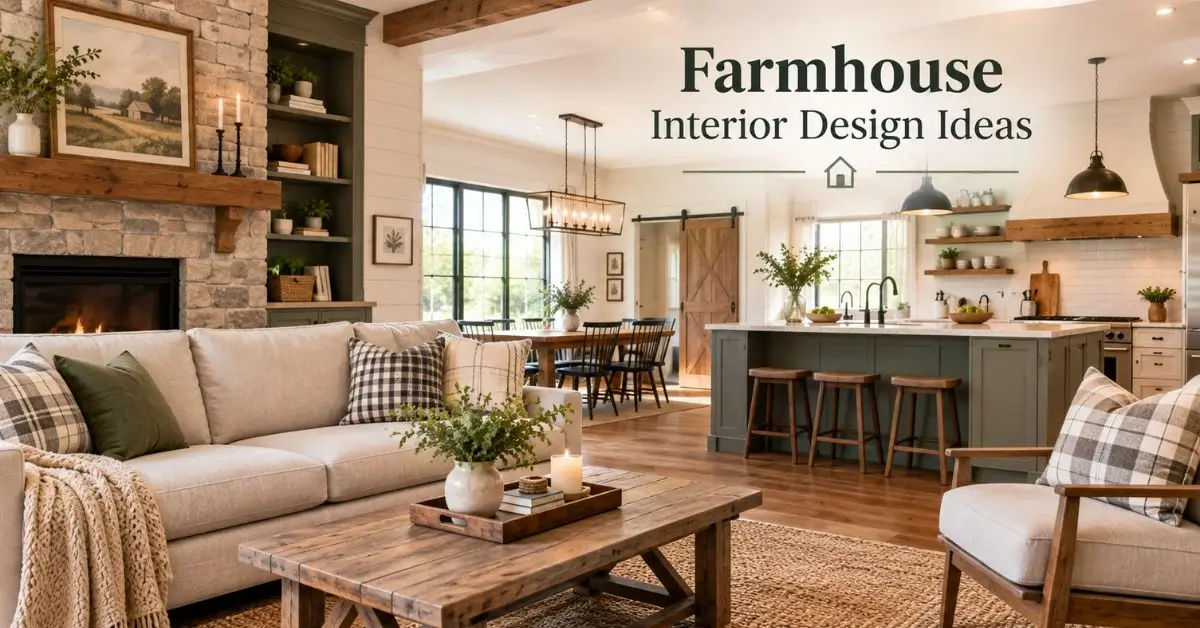

Farmhouse Interior Design Ideas
Walking into a home that feels cold, sterile, or overly formal makes it difficult to unwind after a long day. In recent years, many homeowners decorated their rooms with stark white walls, cold gray floors, and mass-produced furniture. While this minimalist look appeared sleek in photos, it often left living spaces feeling flat, uninviting, and hard to maintain for busy families.
Learning how to incorporate authentic farmhouse elements solves this everyday decorating problem. Creating a warm, welcoming home does not require an endless budget or an actual country property. When you understand how to balance clean lines, natural wood textures, comfortable seating, and warm lighting, you can turn any house or apartment into a cozy sanctuary.
In this practical guide, you will discover the core principles of farmhouse styling, room-by-room decorating blueprints, smart color formulas, and realistic ways to upgrade your space on a budget.
The concept of farmhouse interior design ideas refers to a residential decorating approach that blends rural warmth, natural materials, and vintage character with modern functionality. It emphasizes neutral color palettes, exposed wood finishes, comfortable upholstered furniture, handcrafted pottery, and layered textiles to create relaxed, practical, and inviting living environments designed for everyday family comfort.
Quick Summary
Authentic farmhouse styling is all about warmth, comfort, and practical living. Choose creamy warm neutrals over cold whites, layer rich natural woods like oak and pine, anchor seating with slipcovered sofas, and mix vintage accents with modern fixtures. Focus on tactile textures like linen, wool, and wrought iron while avoiding cheap mass-produced word-art signs.
The Evolution of Farmhouse Style: From Rustic to Warm Modern
Farmhouse design originated from pure necessity. Historic farm families built their homes using whatever sturdy materials were locally available, such as rough-cut timber, fieldstone, and hand-forged iron. Every piece of furniture had to be durable, functional, and easy to clean after long days working outdoors.
Exploring modern farmhouse interior design ideas shows how this practical philosophy has evolved for contemporary living. Today, farmhouse design has moved away from the cold gray tones and fake distressed finishes that were popular a few years ago.
The modern approach focuses on authentic warmth and simplicity. It pairs clean architectural lines and modern energy-efficient appliances with character-rich historic elements. By celebrating natural imperfections like knots in solid wood, subtle variations in handmade pottery, and the soft patina on unlacquered metals, your home develops a timeless, lived-in feel that never goes out of style.
The 60-30-10 Farmhouse Color Palette
Color sets the emotional foundation of your home. If your walls are painted in cool, blue-toned whites, your rooms will always feel chilly regardless of how many throw blankets you add.
To build a cozy, grounded palette, apply the classic 60-30-10 design formula:
Farmhouse Color Distribution
├── 60% Dominant Base (Warm cream, oatmeal, soft biscuit, pale beige)
├── 30% Secondary Tones (Natural honey oak, caramel leather, sage green)
└── 10% Grounding Accents (Aged iron, matte black, antique bronze, terracotta)
The 60 Percent Base: Warm Creamy Neutrals
Cover your walls, large area rugs, and primary furniture in warm, light-reflecting neutrals. Paint colors with subtle yellow, red, or beige undertones create a bright, airy feeling during the day while casting a soft, golden glow under lamps in the evening.
The 30 Percent Secondary: Earth Tones and Woods
This layer brings nature into your home. It includes honey-toned wood floors, exposed ceiling beams, caramel leather armchairs, and muted earth tones like olive green, warm taupe, or soft clay on curtains and accent cabinets.
The 10 Percent Accent: High-Contrast Metals and Deep Tones
Small doses of deep colors ground the space and give the eyes a place to rest. Use matte black iron lighting fixtures, oil-rubbed bronze door hardware, dark picture frames, and rich plaid throw pillows to provide crisp contrast against light walls.
Room-by-Room Styling Frameworks
Every room in your home serves a distinct daily purpose. Decorating each space requires balancing specific functional needs with your broader farmhouse aesthetic.
Applying practical farmhouse interior design ideas across different rooms ensures harmony throughout your entire floor plan:
Whole-Home Styling Blueprint
├── Living Room (Deep slipcovered sofas, layered rugs, stone fireplace)
├── Kitchen & Dining (Shaker cabinets, apron sink, reclaimed wood island)
├── Primary Bedroom (Washed linen bedding, wood nightstands, soft lighting)
└── Entryway & Mudroom (Storage bench, iron wall hooks, durable runner)
1. The Living Room: Warm Layering and Gathering Spaces
The living room is the social center of your home. Start by choosing a deep, comfortable sofa with a washable neutral slipcover. Slipcovers are ideal for busy families because they can be removed and washed easily, keeping your furniture fresh and clean.
Anchor the seating area with a natural woven jute rug layered with a smaller, vintage-style wool rug on top. Add a coffee table made from thick, solid oak or reclaimed barnwood. Keep walking paths open by leaving at least 30 to 36 inches between furniture pieces.
2. The Kitchen: Shaker Cabinets and Apron-Front Sinks
In the kitchen, combine timeless shaker-style cabinet doors with modern quartz countertops. Paint perimeter cabinets in a soft warm cream or mushroom taupe, and use natural stained wood for the center island to create inviting visual depth.
Install a classic apron-front fireclay sink paired with an unlacquered brass or matte black bridge faucet. Dedicate a small section of wall space to thick open wood shelves to display your everyday white dishes, clear drinking glasses, and wooden cutting boards.
3. The Bedroom: Breathable Linens and Restful Tones
Your bedroom should feel like a quiet, restorative retreat. Choose soft, breathable bedding materials such as washed linen or percale cotton in shades of ivory, oatmeal, and soft sage green.
Frame your bed with matching or complementary wooden nightstands and top them with ceramic table lamps with warm 2700K bulbs. Keep work desks, exercise machines, and excess electronics out of the bedroom to maintain a peaceful environment.
4. The Entryway and Mudroom: Functional Vintage Charm
Your entryway creates the first impression for guests. Place a sturdy wooden bench where family members can sit to take off shoes. Mount a row of hand-forged iron hooks for coats and hats, and set a woven seagrass basket nearby to hold umbrellas and shoes.
Farmhouse Style Sub-Genres Comparison
The table below compares popular farmhouse interior design ideas across four major design sub-genres, helping you select the perfect variation for your personal taste:
| Farmhouse Sub-Style | Primary Color Palette | Signature Materials | Furniture Profile | Overall Atmosphere |
|---|---|---|---|---|
| Modern Farmhouse | Crisp whites, soft black, and warm gray | Polished quartz, black steel, light oak | Clean geometric lines with minimalist shapes | Sleek, bright, structured, and contemporary |
| Rustic Country Farmhouse | Creamy oatmeal, biscuit, and forest green | Reclaimed barn timber, rough stone, wrought iron | Chunky, heavy silhouettes with visible wood knots | Cozy, historic, rugged, and lived-in |
| French Country Farmhouse | Soft ivory, pale butter, lavender, and taupe | Limewashed oak, linen, carved plaster, terracotta | Curved cabriole legs with soft tufted upholstery | Romantic, elegant, airy, and European |
| Coastal Farmhouse | Soft white, seafoam green, sand, and ocean blue | Washed driftwood, woven wicker, light linen | Relaxed slipcovers with low-profile frames | Breezy, sunlit, relaxed, and organic |
Real-World Case Study: A $1,200 US Living Room Makeover
You do not need to spend tens of thousands of dollars to bring farmhouse charm into your home. Strategic DIY projects and smart secondhand shopping allow you to achieve a high-end look on a budget.
Applying budget-friendly farmhouse interior design ideas allows homeowners to maximize every dollar.
Consider this realistic US example: A family living in a suburban home in Columbus, Ohio wanted to refresh their dark, dated living room on a strict $1,200 total budget.
Here is how they allocated their funds:
- Warm Interior Paint ($110): Three gallons of creamy warm-linen satin paint to replace dark tan walls and baseboards.
- Large Area Rug ($240): An 8×10 natural woven jute rug layered with an affordable printed vintage runner ($60).
- Thrifted Wood Coffee Table & Wax ($140): Purchased a solid pine coffee table at a local consignment shop, sanded off the old orange finish, and sealed it with clear matte wax.
- Linen Pillow Covers & Throw Blankets ($180): Four textured linen pillow covers and a chunky waffle-knit cotton blanket.
- Lighting Upgrades ($160): Two thrifted ceramic table lamps fitted with new linen drum shades and warm 2700K LED Edison bulbs.
- DIY Floating Wall Shelves ($120): Two thick rough-sawn pine shelves with hidden metal brackets.
- Houseplants & Ceramic Pots ($90): A tall snake plant and a trailing pothos in terracotta planters.
- Hardware & Miscellaneous Supplies ($100): Screws, drywall anchors, painter tape, and caulk.
In a single weekend of targeted work, the family transformed a dark, uninspired room into a bright, inviting gathering space for exactly $1,200, creating a cozy environment that increased their home’s perceived value.
Key Architectural Features: Beams, Shiplap, and Fireplaces
Architectural details give a room soul and structural interest. If your home has basic drywall and flat ceilings, adding a few targeted architectural accents can completely change its character.
Consider these high-impact architectural elements:
Architectural Character Roadmap
├── 1. Exposed Ceiling Beams (Natural rough-sawn cedar or lightweight box beams)
├── 2. Vertical Wall Treatments (Tongue-and-groove or classic beadboard)
├── 3. Natural Stone Fireplace (Stacked fieldstone or limewashed brick)
└── 4. Historic Window Trim (Chunky wooden casing with flat aprons)
1. Ceiling Beams
Installing rough-sawn wood beams across your ceiling draws the eye upward and makes large rooms feel grounded and cozy. If solid structural timber is too heavy or expensive, lightweight faux wood box beams made from three cedar boards look authentic while being easy to install with basic drywall screws.
2. Vertical Wall Paneling
Instead of standard horizontal shiplap, install vertical tongue-and-groove paneling or classic beadboard. Vertical lines make standard eight-foot ceilings feel taller while adding subtle historic texture to accent walls, powder rooms, or dining spaces.
3. Limewashed Brick Fireplaces
If your living room has an outdated orange or dark brown brick fireplace, apply a soft lime wash instead of solid latex paint. Lime wash allows the natural texture of the brick to show through while softening harsh colors into a chalky, historic off-white finish.
Selecting Authentic Materials and Vintage Accents
A major element within farmhouse interior design ideas involves selecting durable, natural materials that age gracefully over time. Disposable flat-pack furniture made from cheap particle board often breaks down after a few years, whereas solid natural materials look better as they develop natural wear.
Focus on these timeless materials when styling your home:
- Solid Hardwoods: White oak, walnut, and pine provide natural wood grain, exceptional strength, and the ability to be sanded down and refinished in the future.
- Natural Fibers: Cotton, washed linen, wool, and jute are breathable, comfortable against the skin, and biodegradable.
- Handmade Ceramics: Displaying unique clay crocks, ceramic vases, and stoneware bowls adds human craftsmanship and organic texture to open shelving and tables.
- Living Greenery: Bring natural life indoors with easy-care houseplants like fiddle leaf figs, olive trees in terracotta pots, and vases filled with dried eucalyptus branches.
The 3-Tier Warm Lighting Architecture
Lighting makes or breaks an interior space. If you rely entirely on a single bright ceiling light, your home will feel like an office building after sunset.
To create a cozy evening atmosphere, layer your lighting across three distinct levels:
Warm Lighting Layers
├── 1. Ambient Layer (Dimmable central chandeliers & flush mounts)
├── 2. Task Layer (Adjustable brass reading lamps & under-cabinet LED strips)
└── 3. Accent Layer (Ceramic table lamps on consoles & pillar candles)
Ambient Overhead Light
Choose an overhead fixture that fits the scale of your room. An open iron chandelier, a wood-beaded pendant, or a simple brass fixture provides general illumination. Always install dimmer switches on your ceiling lights so you can lower brightness levels during dinner or movie nights.
Focused Task Lighting
Place reading lamps next to armchairs and under-cabinet LED lighting strips under kitchen cabinets. Task lights illuminate work surfaces directly without flooding the entire room with harsh glare.
Cozy Accent Lighting
Small table lamps placed on bookshelves, side tables, and entry consoles create inviting pockets of warm light around the edges of the room. Always use LED bulbs rated at 2700K (warm white) to ensure your paint colors and wood tones look rich and natural.
Common Farmhouse Decorating Mistakes to Avoid
Avoiding typical design traps will save you time, money, and frustration when setting up your rooms.
1. Overusing Slogan Signs and Word Art
Mass-produced wooden signs with words like “Gather”, “Farmhouse”, or “Eat” can quickly make a room feel cheap and commercial. Let your comfortable seating, warm lighting, and natural materials express hospitality without needing literal signs to announce it.
2. Buying Matching Furniture Showroom Sets
Purchasing an identical sofa, loveseat, coffee table, and end table set makes your home look like a furniture catalog. Mix different wood finishes, metal tones, and upholstery textures to give your home an organic, collected-over-time appearance.
3. Choosing Cold Lighting Temperatures
Cool white and daylight bulbs (4000K to 5000K) create a harsh blue tint that ruins the warmth of wood finishes and creamy paint colors. Always stick to warm white 2700K bulbs for living areas and bedrooms.
4. Hanging Curtains Too Low and Narrow
Mounting curtain rods directly against the top of the window frame blocks natural sunlight and makes ceilings feel low. Mount your curtain rod 6 to 12 inches above the window frame and extend it 8 inches past each side so drapes frame the glass without covering it.
Conclusion
Transforming your living space with thoughtful farmhouse interior design ideas creates a warm, welcoming home where family and friends love to gather. A great home is not about chasing temporary fads. It is about creating a functional, comfortable sanctuary that supports your daily lifestyle.
By balancing creamy neutral palettes with rich natural woods, investing in comfortable slipcovered seating, highlighting architectural details like ceiling beams, and layering warm lighting, you can design rooms that remain timeless and inviting for decades.
Revisiting your favorite farmhouse interior design ideas with each changing season allows you to refresh small decorative accents, bring in seasonal greenery, and keep your home feeling inspiring all year long.
If you found this interior decorating guide helpful, share it with fellow homeowners and explore our other room design resources to keep discovering practical home improvement inspiration.
Frequently Asked Questions
What are the best farmhouse interior design ideas for small homes?
The best farmhouse interior design ideas for small homes include warm neutral colors, large mirrors, multifunctional furniture, and vertical storage. These choices make small spaces feel brighter, larger, and less cluttered.
How do you make a farmhouse-style home feel modern?
Use clean-lined furniture, shaker cabinets, modern appliances, and simple black metal accents. Combining these elements with natural wood keeps the farmhouse style warm while adding a modern look.
What paint colors work best for farmhouse interiors?
Warm white, beige, taupe, and muted sage green are popular paint colors for farmhouse interiors. These soft shades create a warm, natural, and inviting atmosphere.
How can I decorate in farmhouse style on a tight budget?
Decorate on a budget by upcycling existing furniture, shopping at thrift stores, using DIY wood shelves, and adding affordable rugs and textiles. Small changes such as new pillow covers and warm paint can also refresh a room.
What kind of flooring is best for a farmhouse home?
Wide-plank engineered wood, realistic wood-look LVP, and natural stone are suitable flooring options for farmhouse homes. They provide a warm, natural appearance while offering durability for everyday use.