
Office Wall Decor
Sitting in an office with bare, cold walls can drain your daily energy and harm your focus. Whether you work from a dedicated corporate office or a spare bedroom at home, looking at empty drywall makes the workday feel long and uninspiring. Furthermore, when you join video conference calls, a blank or cluttered wall behind you gives clients and colleagues an unpolished impression.
Learning how to decorate your office walls properly transforms your daily work experience. You do not need an interior design degree or a massive budget to create an inspiring space. When you understand how to balance focus-boosting colors, functional planning tools, acoustic sound absorption, and proper lighting, you can turn any workspace into a productive and professional environment.
In this practical guide, you will discover the science behind productive workspaces, how to build a clean video meeting backdrop, smart acoustic wall treatments, and realistic ways to style your office on any budget.
The concept of office wall decor refers to functional and aesthetic wall elements designed to enhance workspaces, home offices, and corporate environments. It includes framed motivational art, acoustic panels, floating bookshelves, magnetic glass planning boards, and biophilic greenery that combine visual beauty with productivity, sound absorption, and video background professionalism.
Quick Summary
Effective workspace wall design balances visual inspiration with practical daily function. Use large canvas art or acoustic felt panels to reduce room echo during video calls, install magnetic glass boards for project planning, and hang shelves to display books and greenery. Keep your video background clean, balanced, and illuminated with warm 2700K to 3000K lighting.
The Psychology of Productive Workspaces
The objects and colors you place on your office walls directly influence your mental clarity, stress levels, and creative output. When your eyes take a break from staring at computer monitors, your brain looks for visual resting points to reset your focus.
Choosing thoughtful office wall decor does more than just fill blank space. It creates visual ergonomics that support cognitive endurance throughout long workdays:
Cognitive Workspace Drivers
├── 1. Biophilic Connection (Nature photography & living moss walls)
├── 2. Calming Neutral Tones (Warm greige, soft olive, & muted navy)
├── 3. Acoustic Softening (Absorbs room echo & keyboard noise)
└── 4. Functional Clarity (Organized boards that clear mental clutter)
Stark clinical white walls can increase eye strain and make offices feel sterile. Introducing natural wood tones, muted greens, and rich blues lowers resting heart rates and encourages deeper concentration. Surrounding yourself with intentional visual elements helps you stay motivated and calm during high-pressure work sprints.
Core Categories of Modern Office Wall Styling
Every workspace has unique functional requirements. A financial consultant needs a clean, confidential environment, while a graphic designer benefits from dynamic visual stimulation and mood boards.
Exploring modern office wall decor options reveals several versatile styles that work across corporate and home settings:
1. Large-Format Minimalist Canvas Art
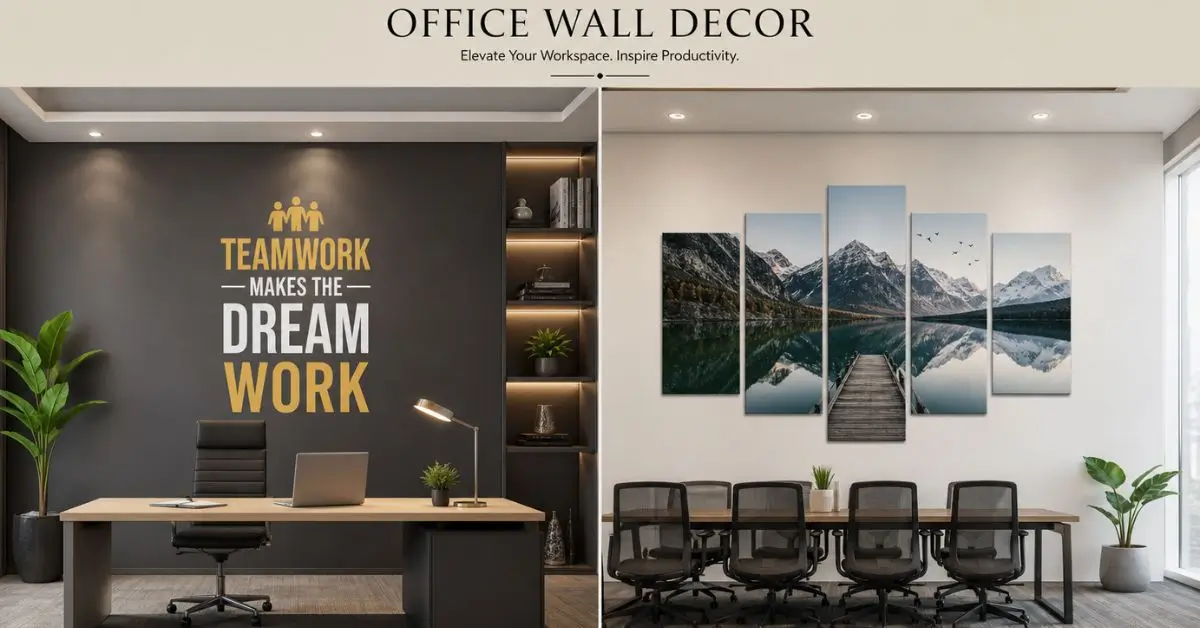
A single large canvas print creates an immediate focal point without causing visual clutter. Abstract geometric shapes, architectural photography, or muted landscape prints bring sophistication to the room. Using a large single piece is usually more effective in small offices than clustering ten small frames, which can make the wall feel chaotic.
2. Acoustic Wood Slat Panels
Acoustic felt-backed wood slat panels are one of the most popular modern office upgrades. These panels feature vertical timber slats mounted onto dark recycled acoustic felt. They add rich architectural texture, make low ceilings feel taller, and absorb sound reflections from hard desks and wood floors.
3. Magnetic Tempered Glass Boards
Traditional whiteboards with aluminum frames look outdated and stain easily from dry-erase markers. Modern frameless magnetic glass boards offer a sleek, contemporary alternative. Available in frosted white, deep charcoal, or clear glass, they provide a durable surface for weekly sprint planning, project mapping, and brainstorming.
4. Floating Walnut or Oak Shelves
Solid wood floating shelves take advantage of vertical wall space without taking up valuable floor area. Use them to store reference books, small awards, ceramic pottery, and trailing houseplants like pothos or English ivy.
The Video Call Backdrop: Styling for Professional Meetings
With millions of professionals working remotely, the wall directly behind your desk chair has become your digital storefront. When meeting with clients or executive leadership on Zoom or Microsoft Teams, your background communicates your attention to detail and professionalism.
To design an exceptional video meeting background:
- Frame the Center Third: Position your primary artwork or floating shelves in the middle third of your camera frame, roughly level with your head and shoulders.
- Avoid Glare on Picture Glass: If you have direct ring lights or windows facing your back wall, picture glass will reflect harsh glares into the camera lens. Choose matte canvas prints, textured fabric wall hangings, or non-reflective museum acrylic to keep visuals clear.
- Maintain Depth and Balance: Avoid sitting with your chair pushed flat against the back wall. Place your desk three to four feet in front of your feature wall to create a natural depth-of-field effect that flatters your camera appearance.
- Keep Personal Clutter Out of Frame: Keep open closet doors, messy paperwork piles, and laundry baskets out of camera view. A simple backdrop consisting of an accent wall, two framed certificates, and a small green plant creates an instantly trustworthy impression.
Workspace Wall Treatments: Material Comparison
Evaluating different types of office wall decor helps you balance functional needs, sound dampening, and aesthetic value across your workspace:
| Wall Decor Material | Sound Absorption | Functional Utility | Visual Style Profile | Typical US Cost Range |
|---|---|---|---|---|
| Acoustic Wood Slat Panels | High (Reduces call echo) | Moderate (Visual texture) | Modern Scandinavian / Architectural | $120 to $250 per panel |
| Frameless Magnetic Glass | None (Reflective surface) | High (Dry-erase writing & magnets) | Sleek Executive / Contemporary | $75 to $200 per board |
| Large Framed Canvas Art | Low (Minimal dampening) | Low (Purely aesthetic) | Minimalist / Creative / Polished | $50 to $180 per canvas |
| Solid Hardwood Floating Shelves | Low | High (Vertical book & plant storage) | Warm Organic / Industrial | $40 to $110 per pair |
| Preserved Moss Wall Art | Moderate to High | Low (Biophilic focus booster) | Natural / Sustainable / Relaxed | $60 to $220 per frame |
| Felt Hexagon Pin Boards | High (Dense felt fibers) | High (Pins notes & schedules) | Casual Modern / Collaborative | $25 to $60 per pack |
Real-World Case Study: A $400 Home Office Transformation
You do not need to spend thousands of dollars to create a professional workspace. Strategic DIY updates and smart accessory choices allow you to transform a plain room on a reasonable budget.
Implementing practical office wall decor on a controlled budget produces dramatic visual and functional improvements.
Consider this realistic US example: A digital marketing consultant in Denver, Colorado worked out of an 11-by-12-foot spare bedroom. The room had plain builder-beige drywall, an echoing audio hollow during client video calls, and zero wall storage. The consultant established a strict $400 total project budget.
Here is how the funds were allocated:
- One Acoustic Wood Slat Panel ($130): Mounted behind the desk to add rich walnut texture and eliminate voice echo on video calls.
- Large Architectural Canvas Print ($85): A 30×40-inch minimalist line art canvas with a matte black floating frame.
- Pair of Oak Floating Shelves ($50): Mounted beside the desk to hold business books and a small Bluetooth speaker.
- Magnetic Glass Calendar Board ($65): Mounted within arm reach of the desk chair for project deadlines.
- Two Potted Indoor Plants ($40): A trailing heartleaf philodendron for the top shelf and a small desk succulent.
- Hardware & Mounting Supplies ($30): Heavy-duty drywall anchors, screws, and level.
In a single Saturday of work, the consultant transformed a generic bedroom into a professional studio for exactly $400. Client feedback on video calls was immediately positive, and room echo was reduced by more than 50 percent.
Acoustic Management and Sound-Absorbing Wall Art
Hard surfaces like wood desks, glass monitors, and hardwood floors bounce sound waves back and forth, creating a hollow, echoing sound on microphone recordings. If your room echoes during calls, adding soft textures to your walls is the most effective solution.
Modern acoustic office wall decor combines sound absorption with sleek visual design:
Sound-Dampening Hierarchy
├── 1. Acoustic Slat Paneling (Broadband frequency dampening)
├── 2. High-Density Polyester Felt Tiles (Absorbs vocal midrange frequencies)
├── 3. Framed Canvas with Rockwool Backing (Custom DIY acoustic art)
└── 4. Preserved Reindeer Moss Frames (Natural acoustic diffusion)
High-Density Felt Tiles
Acoustic felt tiles made from recycled polyester fibers come in modern geometric shapes like hexagons, chevrons, and wave patterns. You can arrange different color tiles on the wall next to your desk to create a custom geometric mural that doubles as a functional pinboard for project notes.
DIY Acoustic Art Panels
If you want the acoustic performance of professional sound panels without the plain commercial look, you can build your own acoustic art. Take an unbacked wooden art frame, stretch printed canvas art over the front, and fill the rear hollow with dense acoustic insulation or recycled cotton batting before mounting it to the wall.
Precise Spatial Rules and Hanging Measurements
One of the most common decorating mistakes in office design is hanging wall elements at incorrect heights. Artwork that is hung too high or planning boards mounted out of reach make a workspace feel awkward and disjointed.
Follow these standard spatial measurements when hanging your decor:
- The Eye-Level Standard: The center of your primary artwork should sit between 57 and 60 inches above the finished floor when viewed from a standing position.
- Desk Clearance Spacing: When hanging art or shelves directly above a computer desk or monitor setup, leave at least 8 to 12 inches of clearance between the top of your monitor screens and the bottom edge of the frame or shelf.
- Multi-Piece Gallery Spacing: When grouping multiple frames together on a single wall, maintain a consistent 2 to 3 inches of space between all frame edges. This ensures the collection reads as a unified gallery rather than random clutter.
- Whiteboard Accessibility: Position the center of a dry-erase planning board roughly 48 to 54 inches from the floor so you can write notes comfortably while seated in your desk chair or standing beside the desk.
Common Workspace Decorating Mistakes to Avoid
Avoiding typical design traps will save you time, money, and frustration when setting up your office.
1. Overcrowding the Line of Sight
Do not cover every square inch of wall space directly in front of your desk. Your eyes need open, neutral space to rest when you look away from your computer screen. Keep the wall directly in front of your monitors relatively calm, placing busier gallery walls or planning boards on side walls.
2. Ignoring Light Reflections on Glass
Hanging glossy glass frames directly across from a bright south-facing window causes blinding light glares throughout the afternoon. Always consider your room’s natural and artificial lighting paths before drilling mounting holes.
3. Choosing Clashing Visual Styles
Mixing too many conflicting design themes, such as rustic weathered barnwood with high-gloss futuristic chrome, creates visual confusion. Pick one clear design direction, such as Warm Minimalist, Scandinavian Modern, or Industrial Executive, and keep your wood finishes, metal tones, and frame styles consistent throughout the room.
Conclusion
Designing an inspiring workspace through office wall decor transforms your daily productivity, professional confidence, and personal well-being. A thoughtfully styled office is not an unnecessary luxury. It is an essential productivity tool that supports your focus and brings calm energy to your workday.
By incorporating acoustic wood textures, organizing goals on magnetic glass boards, hanging art at comfortable heights, and setting up an attractive video meeting background, you can create a workspace that inspires your best work every day.
Revisiting your office wall arrangement and updating your visual focal points every few seasons keeps your work environment fresh, organized, and motivating all year long.
If you found this workspace design guide helpful, share it with your remote colleagues and explore our other interior styling resources to keep discovering practical home improvement inspiration.
Frequently Asked Questions
What is the best office wall decor for productivity?
Use magnetic planning boards, nature prints, green plants, and warm wood accents to keep the space organized and calming.
How do I choose office wall decor for video call backgrounds?
Use matte canvas art, floating shelves, or wood panels behind you. Avoid mirrors and glossy surfaces that create camera glare.
How can I reduce room echo using wall decor?
Install acoustic wood panels, felt tiles, or fabric-covered acoustic art. These absorb sound and reduce wall reflections.
How high should artwork be hung above an office desk?
Keep artwork about 8–12 inches above the desk or monitor. This creates a balanced gap without making the wall feel crowded.
Can I decorate office walls without drilling?
Yes. Use heavy-duty adhesive strips for lightweight art and felt panels, or lean framed artwork on a desk or credenza.