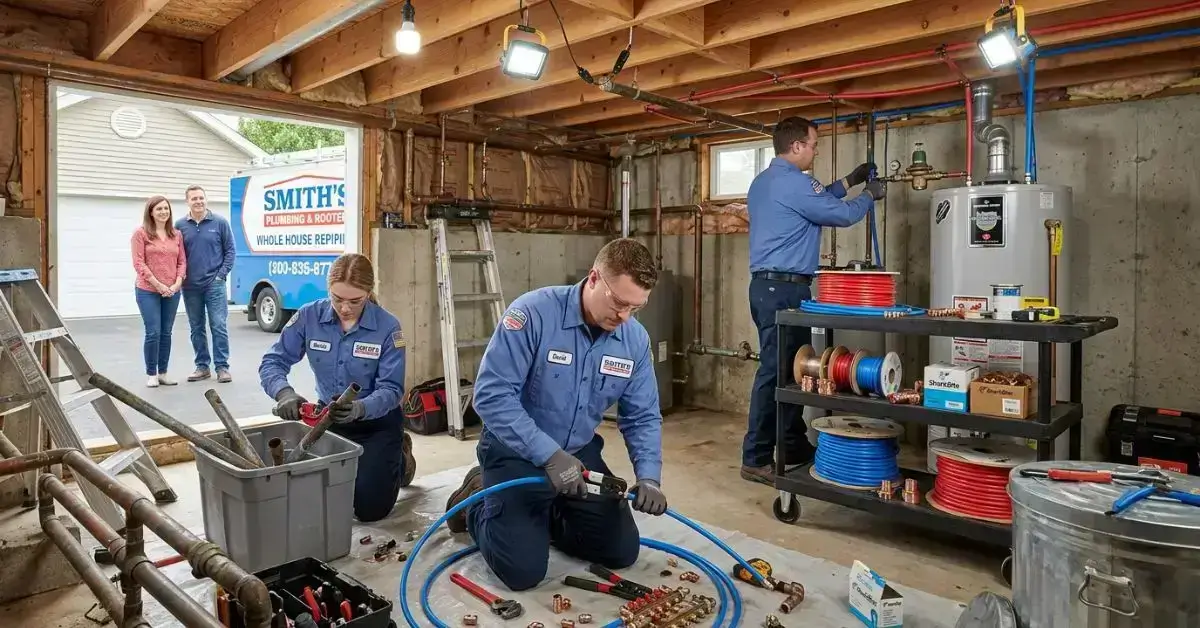

Whole House Repiping: What You Need to Know
Old pipes do not announce themselves. They give you small signs at first a little rust in the water, slightly lower pressure, a faucet that drips more than it used to. Most homeowners ignore these signs for months or even years before the problem becomes impossible to overlook.
By the time a pipe bursts behind a wall or rust-colored water starts coming out of the kitchen tap every morning, the cost and disruption are already significant. That is the reality of aging plumbing in older American homes.
Whole house repiping is one of the most important and most misunderstood home improvement decisions a homeowner can make. It sounds expensive and disruptive, and it can be both. But done at the right time and for the right reasons, it protects the home, improves daily water quality, and prevents far more costly damage down the road.
In this guide, you will learn exactly what repiping involves, the clear signs your home needs it, what different pipe materials offer, what the process looks like, and what it realistically costs.
Whole house repiping is the process of replacing all or most of the existing water supply pipes throughout a home with new piping. It is typically done when pipes are too old, corroded, or damaged to be reliably repaired. The goal is to restore safe, clean, and consistent water flow throughout the entire plumbing system from the main supply line to every fixture.
Quick Summary
Whole house repiping replaces aging or damaged pipes throughout your home. It is necessary when pipes are corroding, causing low pressure, or contaminating your water. PEX and copper are the most common materials used today. Costs typically range from $4,000 to $15,000 depending on home size and pipe material. Most jobs take two to five days.
Signs Your Home May Need Repiping
Not every plumbing problem requires full repiping. But certain signs suggest the system has reached the point where ongoing repairs are no longer a smart investment.
Discolored or Rusty Water
If the water coming from your taps has a brown, red, or yellow tint, especially first thing in the morning, that color is coming from corroding pipes. This is one of the clearest signs that galvanized steel pipes inside the walls are deteriorating.
Rusty water is not just unpleasant. It signals that the pipe interior is breaking down and those particles are entering your drinking and bathing water.
Frequent Leaks
An occasional leak can happen in any home. But if you are calling a plumber for pipe leaks multiple times a year, especially in different locations, the pipe material itself is failing. Patching individual leaks in a corroding system is like putting a bandage on a problem that keeps growing.
At some point, the cost of repeated repairs adds up to more than the cost of replacing everything properly.
Consistently Low Water Pressure
When mineral scale and corrosion build up inside pipes over decades, the internal diameter shrinks. Water has less space to flow through, and pressure drops noticeably throughout the home.
If your water pressure has been gradually decreasing over the years and cleaning fixtures has not helped, the restriction is likely inside the pipes themselves, not at the fixture level.
Noisy Pipes
Banging, rattling, or vibrating sounds inside walls when water runs can indicate pipes that have corroded, shifted, or lost their secure fittings. While not always a sign that full replacement is needed, it is worth having a plumber assess the condition of the pipes directly.
Your Home Is Over 50 Years Old with Original Pipes
Homes built before the 1970s often still have galvanized steel pipes. Homes built between the 1970s and early 1990s may have polybutylene pipes, a material that was widely used but is now known to degrade and fail. If your home has never been repiped and is 50 or more years old, a professional inspection is a smart step.
A plumber can inspect pipe conditions, identify which material is currently installed, and give you an honest assessment of remaining useful life.
Pipe Material Options
One of the most important decisions in a repiping project is which material to use. Each has real advantages and limitations.
| Material | Lifespan | Cost Level | Best For |
|---|---|---|---|
| PEX | 25 to 50 years | Low to moderate | Most residential homes |
| Copper | 50 to 70 years | Moderate to high | Long-term investment, proven durability |
| CPVC | 25 to 40 years | Low | Budget-conscious projects, hot and cold lines |
| Galvanized Steel | 20 to 50 years | Moderate | Rarely used in new installs today |
PEX Piping
PEX, or cross-linked polyethylene, has become the most popular choice for residential repiping in the United States. It is flexible, which means it can be routed through walls with fewer connections and fittings. Fewer joints mean fewer potential leak points.
PEX is also resistant to scale buildup and does not corrode. It is easier and faster to install than copper, which keeps labor costs lower. Most plumbers working on residential repiping today default to PEX unless the homeowner requests something different.
Copper Piping
Copper has been used in residential plumbing for decades and has a proven track record. It is durable, resistant to bacteria, and has a long lifespan when installed correctly.
The downside is cost. Copper is significantly more expensive than PEX in both materials and labor, since it requires soldering at each connection. For homeowners who want the most established and long-lasting option and are willing to pay for it, copper remains a solid choice.
CPVC Piping
CPVC is a chlorinated plastic pipe that handles both hot and cold water. It is less expensive than copper and easier to install. However, it is more brittle than PEX and can crack under physical stress or in freezing temperatures. It is a reasonable choice in moderate climates but not the first recommendation in areas with cold winters.
What the Repiping Process Looks Like
Many homeowners worry about living through a repiping project. Understanding the process makes it far less stressful.
Initial Assessment
A licensed plumber inspects the existing plumbing system, identifies pipe material and condition, and maps out the scope of work. This usually involves checking under sinks, in the attic, crawl space, and any accessible wall areas.
Based on this assessment, you receive a written quote covering materials, labor, timeline, and any expected drywall repair work.
Permits and Scheduling
In most US states, a repiping project requires a permit from the local building authority. A reputable plumber will pull this permit before starting work. Do not hire anyone who suggests skipping the permit process — this can create serious problems when selling the home or making an insurance claim.
Scheduling is usually straightforward. Most projects are booked one to three weeks out depending on the plumber’s availability and the size of the job.
The Installation Process
On the first day, the crew typically shuts off the main water supply and begins removing drywall in key locations to access pipe runs. The exact number of wall openings depends on the home’s layout and the pipe routing required.
For a standard three-bedroom home in the US, the crew usually works through the project in two to five days. PEX installs faster than copper due to its flexibility, which can shorten the timeline.
Water is typically restored each evening so the household can function, though this depends on the scope of work and the plumber’s approach.
Drywall Repair
After new pipes are installed and tested, the openings in walls and ceilings need to be patched. Some plumbing companies include basic drywall patching in their quote. Others charge separately or recommend you hire a drywall contractor after the plumbing work is complete.
Ask about this upfront. Knowing whether drywall repair is included prevents unexpected costs after the project is done.
Inspection and Testing
Once the new pipes are installed, the system is pressure tested to confirm there are no leaks. A building inspector then reviews the work to confirm it meets local code requirements. This step is part of the permit process and protects you as the homeowner.
After passing inspection, the plumber restores full water service and the project is complete.
What Does Whole House Repiping Cost?
Cost is the most common concern, and for good reason. This is a significant investment.
Several factors affect the final price:
Home size is the biggest variable. A 1,200 square foot home needs far less pipe than a 3,000 square foot home with two stories and multiple bathrooms.
Pipe material matters significantly. PEX is less expensive than copper. A full copper repipe of a large home can cost considerably more than the same job done in PEX.
Accessibility affects labor time. Homes with a crawl space and open attic are easier and faster to work in than slab-foundation homes where pipes run under concrete.
Local labor rates vary by region. Plumbers in major cities like Los Angeles or New York typically charge more per hour than those in smaller markets.
Realistic cost ranges for the US market:
- Small home under 1,500 sq ft: $4,000 to $7,000
- Medium home 1,500 to 2,500 sq ft: $7,000 to $12,000
- Large home over 2,500 sq ft: $12,000 to $15,000 or more
These figures include labor and materials but may not include drywall repair or permit fees, which typically add $500 to $2,000 depending on the scope.
Get at least three written quotes from licensed plumbers before committing. Quotes that are significantly lower than others often reflect shortcuts in materials or labor that will cost more in the long run.
Repiping vs. Spot Repairs: How to Decide
This is the question most homeowners wrestle with. Repiping is a major expense, so the decision deserves careful thought.
Spot repair makes sense when:
- The home is relatively new and pipes are generally in good condition
- Only one or two isolated leaks have occurred
- A professional inspection shows the rest of the system is healthy
- Budget constraints make full repiping impractical right now
Repiping makes sense when:
- Multiple leaks have occurred in different locations
- Pipes are over 50 years old and show widespread corrosion
- Water quality is visibly affected by rust or sediment
- The pipe material is known to fail, such as polybutylene
- You are planning to sell the home and want to protect its value
A good plumber will give you an honest recommendation based on the actual condition of your pipes, not just the most profitable option. If you are unsure, a second opinion from another licensed plumber is always worth considering before making a final decision.
How to Choose the Right Plumber for a Repiping Job
Not all plumbing companies handle whole house repiping regularly. This is a specialized job that requires experience, proper licensing, and a clear process.
Look for these qualities:
Licensed and insured. Verify the plumber holds a valid state license and carries liability and workers compensation insurance. Most states make license verification easy through an online search.
Experience with repiping specifically. Ask how many repiping projects they complete each year. A company that does this regularly will have a smoother, faster process than one that treats it as an occasional job.
Written quote with full detail. The quote should break down material costs, labor, permit fees, and whether drywall repair is included. Vague quotes lead to surprise charges.
References or reviews from recent repiping jobs. Ask for references from customers who had a full repiping done. Online reviews on Google or the Better Business Bureau are also a reliable source.
Clear timeline and communication. A professional plumber can give you a realistic start date, daily schedule, and expected completion time before the job begins.
Conclusion
Whole house repiping is a significant investment, but for homes with aging or failing pipes, it is often the most practical and cost-effective decision in the long run. Waiting for the problem to get worse rarely saves money it usually makes everything more expensive and more disruptive.
If you are seeing the signs, get a professional inspection first. A licensed plumber can tell you the true condition of your pipes and give you an honest recommendation. From there, you can make a confident, informed decision.
If this guide helped you understand the process, explore our related articles on plumbing maintenance tips and how to find a licensed plumber in your area for your next steps.
Frequently Asked Questions
How long does whole house repiping take?
Most projects take two to five days for an average-sized home. Larger or more complex homes may take up to a week. PEX installs faster than copper, which can shorten the timeline. Water is usually restored each evening so your household can function normally.
Is whole house repiping worth the cost?
Yes, when pipes are old, corroding, or leaking repeatedly. Repiping improves water quality, restores pressure, prevents damage, and adds value when selling your home. Ongoing repair costs often add up to more than repiping done at the right time.
What is the best pipe material for repiping a house?
PEX is the most popular choice in the US. It is flexible, corrosion-resistant, and less expensive to install than copper. Copper lasts longer but costs more. Both are reliable when installed by a licensed plumber.
Will repiping my house make a mess?
There will be some disruption. Plumbers open walls in specific spots to access pipes, but experienced crews keep openings minimal. Ask upfront whether drywall repair is included in the quote or needs to be arranged separately.
Does homeowners insurance cover repiping?
Generally no. Insurance does not cover repiping due to age or wear. However, if a pipe bursts and causes sudden water damage, your policy may cover the resulting damage. Always check your specific policy with your insurance provider.