
Introduction
Water problems rarely give you much warning. One morning your shower pressure drops. A week later you notice a damp patch under the kitchen sink. Then your water bill arrives and it’s $40 higher than last month for no obvious reason.
Each of these can feel like a separate problem. But in most cases, they’re symptoms of the same thing — something in your home’s water system needs attention.
The challenge isn’t just fixing the issue. It’s knowing what you’re actually dealing with before you start pulling things apart. A misdiagnosed repair can turn a $50 fix into a $500 problem.
This guide walks you through the most common home water system repair situations — how to recognize them, what causes them, what you can fix yourself, and when to bring in a professional.
What Is Home Water System Repair?
Home water system repair refers to identifying and fixing problems within your home’s plumbing and water supply network. This includes repairing leaks, restoring water pressure, fixing faulty valves and fixtures, addressing water heater issues, and clearing blockages. It covers both DIY-friendly tasks and situations that require a licensed plumber — depending on the complexity and location of the problem.
Quick summary
Diagnose before you repair. Most common water system problems — leaks, pressure issues, running toilets, faulty valves — can be fixed at home with basic tools. Burst pipes, sewer issues, and gas water heater repairs always need a professional.
Step 1: Diagnose the Problem First
The biggest mistake homeowners make is jumping straight into a repair without understanding what’s actually wrong.
Before touching anything, take a few minutes to observe the problem clearly.
Ask yourself:
- Is the problem happening at one fixture or throughout the house?
- Did it start suddenly or build up gradually?
- Is there visible water, moisture, or staining anywhere?
- Has anything changed recently — new appliance, recent cold snap, pressure spike?
These questions matter because the answers point you toward the right repair. Low pressure at one faucet is a completely different problem from low pressure in every room. A slow drain in one sink is not the same as multiple slow drains throughout the house.
Getting the diagnosis right saves time, money, and the frustration of fixing the wrong thing.
Common Water System Problems and How to Repair Them
Problem 1: Low Water Pressure
At a single fixture:
This is almost always a clogged aerator or showerhead. Mineral deposits — especially in hard water areas — build up inside the small mesh screen and restrict flow.
Fix: Unscrew the aerator from the faucet tip (usually by hand). Soak it in white vinegar for 30 minutes. Rinse and reattach. For a showerhead, soak it in a vinegar-filled bag secured with a rubber band overnight.
This fix costs nothing and takes under 15 minutes.
Throughout the whole house:
This is more serious. Possible causes include a partially closed main shut-off valve, a failing pressure reducing valve (PRV), or significant pipe corrosion narrowing your supply lines from the inside.
Start by checking that your main shut-off valve is fully open. Then check your PRV if you have one — it’s usually located where the main line enters your home. If pressure is consistently below 40 PSI throughout the house, call a plumber for a proper assessment.
Problem 2: Leaking Pipes or Fittings
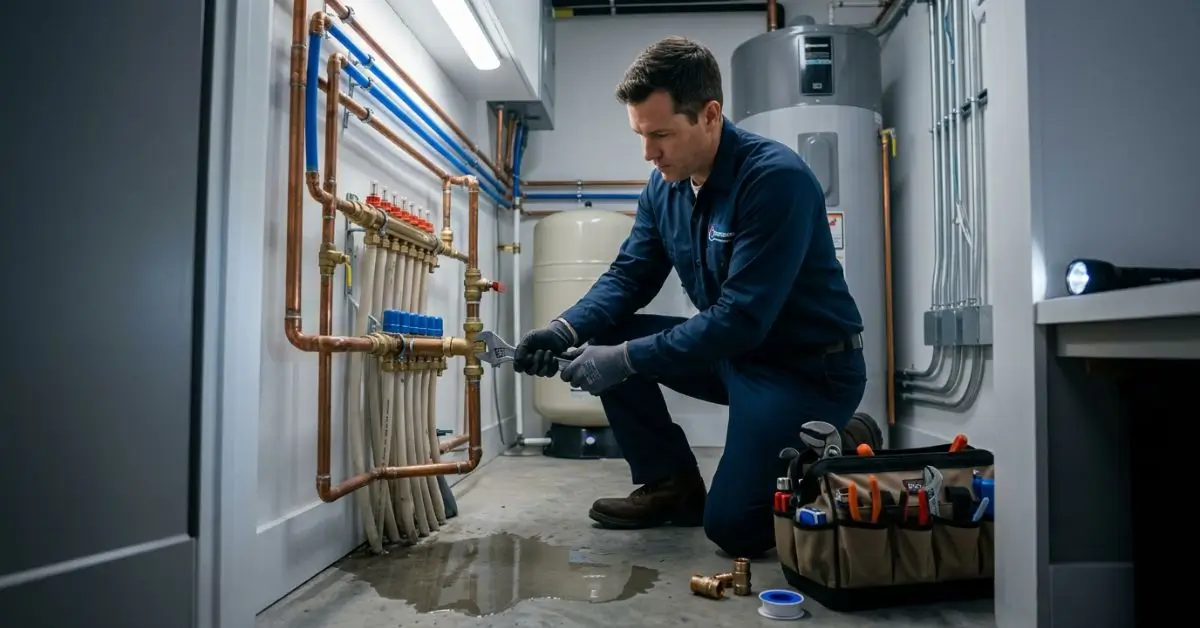
Leaks range from a slow drip at a supply line fitting to a pinhole leak in a copper pipe behind the wall. How you respond depends on where the leak is.
Supply line leaks (under sink or behind toilet):
These are DIY-friendly. Turn off the shut-off valve, replace the supply line, and wrap the fittings with Teflon tape before reattaching. New supply lines cost $5–$15 and the repair takes about 20 minutes.
Compression fitting leaks:
If a compression fitting at a valve is dripping, try tightening it gently with a wrench — about a quarter turn. Don’t over-tighten. If that doesn’t stop the drip, the fitting needs to be replaced.
Pinhole leaks in copper pipe:
These can be patched temporarily with a pipe repair clamp (available at hardware stores for around $10–$20). But a temporary patch is not a long-term solution. If your copper pipes are developing pinhole leaks, it often signals corrosion throughout the system — worth a professional evaluation.
Hidden leaks inside walls:
Signs include damp drywall, bubbling paint, musty smell, or an unexplained rise in your water bill. These need a plumber. Don’t open walls without a proper diagnosis — a plumber can use moisture meters and inspection cameras to locate the leak precisely.
Problem 3: Running or Faulty Toilet
A toilet that runs continuously is one of the most common home water system repair calls — and one of the most unnecessary, because it’s almost always fixable in under 20 minutes.
Worn flapper:
Put food coloring in the tank. If color appears in the bowl without flushing, the flapper isn’t sealing. Replace it — $5 at any hardware store.
Float set too high:
If water is running into the overflow tube, lower the float. On newer fill valves, turn the adjustment screw. On older ball-float systems, bend the arm slightly downward.
Faulty fill valve:
If adjusting the float doesn’t help and the tank fills slowly or constantly runs, the fill valve itself may need replacing. This is still a DIY repair — fill valve kits cost around $10–$15 and come with clear instructions.
Problem 4: No Hot Water or Inconsistent Water Temperature
This points to your water heater.
Check these first:
- Is the pilot light on? (Gas heaters)
- Has the circuit breaker tripped? (Electric heaters)
- Is the thermostat set correctly? (Recommended: 120°F)
- Is the tank full of sediment? (Symptom: rumbling sounds, lukewarm water)
Sediment flush:
Connect a garden hose to the drain valve at the bottom of the tank. Turn off the heater and cold water supply. Open the drain valve and let the tank flush until water runs clear. This simple step restores efficiency and is something most homeowners can do annually.
When to call a professional:
Any repair involving the gas supply line, pressure relief valve replacement, or a tank that’s leaking from the bottom needs a licensed plumber or HVAC technician. Don’t attempt gas line work yourself.
Problem 5: Slow or Blocked Drains
A single slow drain is a blockage. Multiple slow drains at the same time is a main sewer line issue.
Single drain:
Try baking soda and vinegar first — half a cup of each, 15 minutes, then flush with hot water. For a more stubborn clog, use a hand drain snake to physically pull out the blockage. Avoid chemical drain cleaners for regular use — they corrode older pipes over time.
Kitchen drain specifically:
Grease buildup is the most common cause. Pour boiling water down the drain monthly to melt accumulation. Never pour cooking oil directly down the sink — it solidifies inside the pipe.
Multiple drains slow:
This is a sewer line issue. Signs include gurgling sounds from drains, sewage smells, or water backing up in multiple fixtures at once. This needs a professional with a sewer camera — don’t attempt this yourself.
Problem 6: Water Hammer (Banging Pipes)
Water hammer is the loud banging sound you hear when you quickly shut off a faucet or when a washing machine valve closes fast. It’s caused by the sudden stop of fast-moving water creating a pressure wave through the pipes.
Fix options:
- Install water hammer arrestors — small devices that absorb the pressure shock. They screw onto supply connections and cost $10–$20 each.
- Secure loose pipes with pipe straps if the banging is causing pipes to physically move against walls or joists.
- Lower your water pressure if it’s above 80 PSI — high pressure makes water hammer worse.
Water hammer isn’t just annoying. Over time, the repeated pressure shocks can weaken pipe joints and fittings. It’s worth fixing properly.
Quick Reference: Repair vs. Call a Plumber
| Problem | DIY Repair? | Call a Plumber If… |
|---|---|---|
| Low pressure at one fixture | Yes | Pressure is low throughout the home |
| Leaking supply line | Yes | Leak is inside the wall |
| Running toilet | Yes | Problem persists after replacing parts |
| Slow single drain | Yes | Multiple drains are slow at once |
| Water heater sediment flush | Yes | Tank is leaking or gas line involved |
| Water hammer | Yes | Problem persists after arrestor install |
| Burst pipe | No | Always |
| Sewer line blockage | No | Always |
| Pinhole leaks in copper | Temporary patch only | For permanent repair |
| Hidden wall leak | No | Always |
What a Professional Plumber Brings That You Don’t Have
This isn’t about selling plumber services. It’s about being honest.
A licensed plumber has inspection cameras, pressure testing equipment, and the experience to diagnose problems accurately without damaging your home in the process. They also know local building codes — which matters when repairs require permits.
In the US, plumbing work involving main supply lines, sewer connections, gas lines, or water heater replacements typically requires a licensed contractor and a permit. Skipping this step can create serious problems when you sell your home or file an insurance claim.
Use DIY repairs where they genuinely make sense. Call a professional when the stakes are higher than a $15 part and 20 minutes of your time.
Conclusion
Most home water system repair situations follow the same pattern — something small gets ignored, builds up quietly, and eventually becomes an urgent (and expensive) problem. The homeowners who handle repairs well are the ones who notice issues early, diagnose them correctly, and make smart decisions about what to fix themselves and what to hand over to a professional.
Start with a proper diagnosis. Fix what’s genuinely within your skill level. Be honest about your limits. And when in doubt, a plumber’s call-out fee is almost always cheaper than fixing a DIY repair gone wrong.
Your water system works hard every day. A little attention goes a long way.
Frequently Asked Questions
What is home water system repair and what does it cover?
It covers fixing leaks, pressure issues, drain blockages, water heater faults, and faulty valves. Some are DIY-friendly. Others — like main line, gas, or hidden pipe issues — need a licensed plumber.
How do I find a water leak in my home?
Use the water meter test turn off all water, note the reading, wait 20 minutes, check again. If it moved, you have a leak. Also check under sinks, around toilets, and near the water heater for moisture or staining.
Why has my water pressure suddenly dropped?
If it’s throughout the house, check your main shut-off valve and pressure reducing valve. If it’s just one fixture, clean the aerator or showerhead with vinegar — mineral buildup is usually the cause.
Can I repair a leaking pipe myself?
Supply line leaks under sinks or toilets are DIY-friendly. Pinhole leaks can be patched temporarily. Leaks inside walls always need a plumber — don’t open walls without a proper diagnosis first.
How much does home water system repair typically cost?
DIY minor repairs cost $5–$30 in parts. A plumber call-out runs $100–$300 for simple fixes. Larger repairs like pipe replacement or water heater installation can reach $500 to several thousand dollars.