

Introduction
Looking up at your ceiling can tell you a lot about the age and style of your home. Many homeowners notice bumpy, uneven patterns overhead and wonder what kind of finish they actually have. If your ceiling looks rough and dated, you might be trying to figure out if it is traditional popcorn or a more modern drywall texture.
Understanding your ceiling finish is important when planning home improvements, painting rooms, or preparing a house for sale. Different ceiling treatments require different cleaning methods, carry distinct repair costs, and can even impact your home value. In older houses, knowing the difference also helps you identify potential health risks before starting a renovation project.
In this practical comparison guide, you will discover the core differences between ceiling finishes, learn about popular modern texture styles, understand the costs of removal, and decide which option fits your home best.
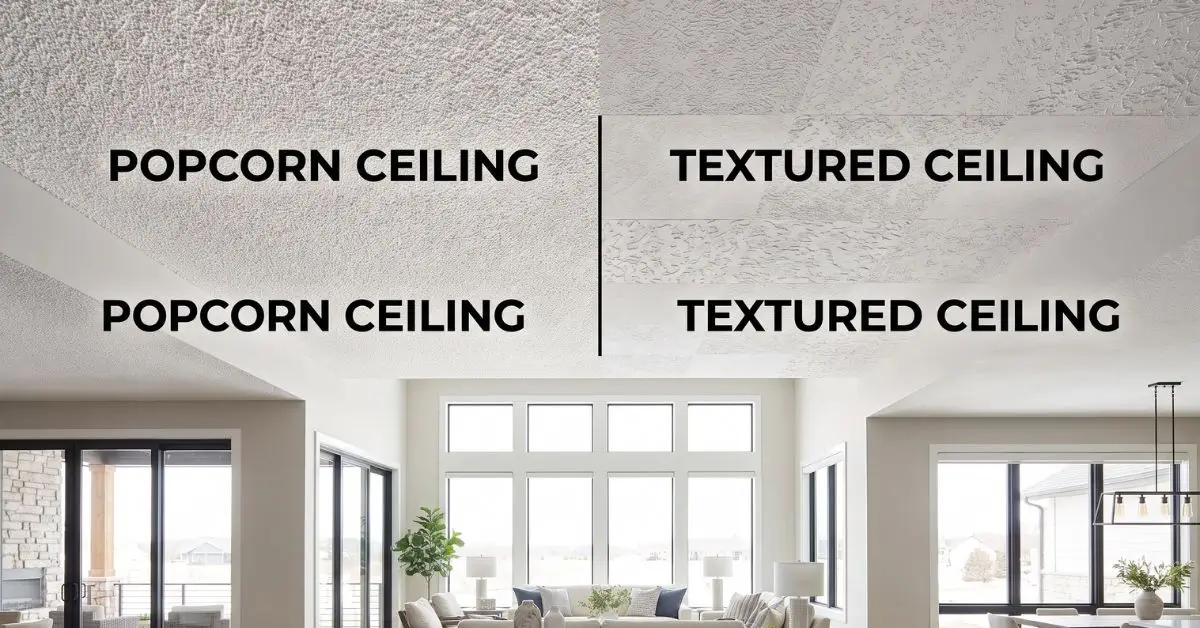
The comparison of popcorn ceiling vs textured ceiling comes down to materials and design. A popcorn ceiling is a specific acoustic finish made with spray-on vermiculite, styrofoam beads, or heavy aggregate. A textured ceiling refers to any drywall mud pattern, such as orange peel, knockdown, or skip trowel, applied to hide drywall seams and add subtle visual style.
Quick Summary
Popcorn ceilings use heavy spray-on particles for sound dampening and are considered outdated in modern interior design. In contrast, modern textured ceilings use thinned drywall joint compound applied in subtle patterns like orange peel or knockdown. Modern drywall textures are easier to clean, simpler to paint, and much more attractive to modern home buyers.
What Is a Popcorn Ceiling?
A popcorn ceiling, also known as an acoustic ceiling, was one of the most popular home building features from the late 1950s through the 1980s. Builders loved popcorn ceilings because they saved massive amounts of labor time. Instead of spending days taping, mudding, and sanding drywall joints to create a perfectly flat surface, contractors could spray a thick, bumpy aggregate mixture over bare drywall in minutes.
The bumpy texture was created by mixing standard drywall compound with small particles of expanded polystyrene (styrofoam), vermiculite, or cardboard fibers. This heavy texture resembled cottage cheese or popped popcorn kernels, which gave the finish its common nickname.
Beyond hiding structural drywall flaws, popcorn ceilings served a functional purpose. The deep pockets and rough surface helped absorb sound waves, reducing echoes in large living rooms and hallways. However, the same rough surface that deadens sound also acts as a magnet for dust, cobwebs, and airborne grease.
In houses built in the United States before 1980, popcorn ceiling mixtures often contained asbestos fibers for fireproofing and binding strength. While undisturbed asbestos is not an immediate danger, disturbing or scraping an old popcorn ceiling can release hazardous fibers into the air.
What Is a Modern Textured Ceiling?
A modern textured ceiling refers to any finish created using thinned drywall joint compound (often called drywall mud) applied without rough styrofoam or cardboard pellets. Instead of relying on heavy mechanical aggregate, modern textures use tools like spray guns, trowels, brushes, or rollers to create controlled, subtle patterns on the drywall surface.
Drywall textures became the standard in residential construction as interior design moved away from heavy acoustic coatings in the 1990s and 2000s. Builders still use textures to conceal minor drywall seams and ceiling framing imperfections, but modern styles are flatter, cleaner, and far more durable.
Modern textures are tightly bonded to the drywall paper, meaning they do not crumble or flake off when lightly touched. Because they are made from standard drywall mud, they can be primed and painted with ordinary rollers just like a flat wall. They add visual depth and architectural interest to a room without creating dark shadows or catching heavy amounts of household dust.
Popcorn Ceiling vs Textured Ceiling: Core Differences Explained
To choose the best finish for your home renovation, you need to understand how these two ceiling categories compare across everyday performance factors.
When evaluating popcorn ceiling vs textured ceiling options, several distinct characteristics separate the two treatments:
Ceiling Comparison Framework
├── 1. Material Composition (Aggregate beads vs. smooth drywall mud)
├── 2. Surface Cleanability (Fragile dust trap vs. wipeable paint)
├── 3. Lighting Interaction (Deep shadows vs. soft light reflection)
└── 4. Market Appeal (Dated resale factor vs. modern standard)
1. Texture Profile and Depth
Popcorn ceilings have a deep, three-dimensional profile that extends roughly one-quarter to one-half inch downward from the drywall board. The bumps are sharp, irregular, and soft to the touch.
Modern drywall textures, such as orange peel or knockdown, have a low-profile depth of only one-sixteenth to one-eighth of an inch. The surface is flatter, rounded, and smooth under your fingertips.
2. Cleaning and Maintenance
Cleaning a popcorn ceiling is notoriously difficult. If you try to wipe a popcorn surface with a damp cloth or sponge, the water softens the unpainted mud and causes the texture to dissolve and fall off in chunks. Vacuuming with a brush attachment often chips off pieces, leaving bare drywall patches behind.
Modern textured ceilings are painted with durable interior latex paint. You can easily dust them with a microfiber duster, vacuum them with a soft brush, or gently wipe away kitchen grease splatters with a damp sponge without damaging the finish.
3. Light Reflection and Room Brightness
Because popcorn texture consists of thousands of raised bumps, it casts tiny shadows across the entire ceiling plane. This shadow effect makes ceilings feel lower and rooms look darker, which is especially noticeable in rooms with low eight-foot ceilings.
Textured ceilings reflect light much more evenly. Light from windows and lamps bounces across the flatter surface, helping small rooms feel brighter and more open.
Head-to-Head Comparison
The table below breaks down the technical and aesthetic differences between a popcorn ceiling vs textured ceiling to help you make an informed decision for your living space:
| Feature Category | Traditional Popcorn Ceiling | Modern Textured Ceiling |
|---|---|---|
| Primary Material | Drywall mud mixed with styrofoam or vermiculite | Pure drywall joint compound (mud) |
| Texture Thickness | Thick and deep (1/4 inch to 1/2 inch) | Subtle and flat (1/16 inch to 1/8 inch) |
| Sound Dampening | High acoustic absorption | Moderate to low sound absorption |
| Dust Resistance | Low (Traps dust, cobwebs, and smoke) | High (Easy to clean and wipe down) |
| Painting Difficulty | High (Requires airless sprayer to avoid chipping) | Easy (Can be painted with standard roller) |
| Repair Complexity | Difficult to match patch textures seamlessly | Simple to patch with standard drywall mud |
| Resale Perception | Outdated (Often reduces buyer interest) | Modern and acceptable to most home buyers |
| Asbestos Potential | Possible in US homes built before 1980 | Extremely unlikely (Pure drywall mud) |
Popular Modern Ceiling Textures to Consider
If you are replacing an old acoustic ceiling or finishing a new room, you do not have to settle for completely smooth drywall. A completely flat, smooth ceiling requires level-five drywall finishing, which can be expensive. Choosing a modern drywall texture provides a stylish compromise.
Here are the most popular textures used in contemporary homes:
1. Knockdown Texture
Knockdown is the most popular ceiling finish in modern residential construction. A contractor sprays a watered-down joint compound onto the ceiling in small droplets. After letting the mud set for ten to fifteen minutes, the finisher runs a wide, flat drywall knife over the surface to flatten the tops of the bumps.
This creates a warm, Mediterranean-style finish that resembles natural stucco or Spanish lace. Knockdown is durable, easy to paint, and hides minor ceiling flaws beautifully.
2. Orange Peel Texture
As the name suggests, orange peel texture resembles the bumpy skin of an orange. A technician uses a pneumatic spray gun with a small nozzle to spray fine mist droplets across the ceiling.
Unlike knockdown, orange peel is left to dry without being flattened by a knife. The result is a subtle, uniform texture that provides a clean, modern look. It is one of the most budget-friendly finishes to apply and repair.
3. Skip Trowel Texture
Skip trowel is a hand-applied art finish often found in high-end custom homes. A drywall finisher places a small amount of joint compound on a curved trowel and glides the blade across the ceiling at a shallow angle. The trowel skips across the drywall, leaving thin, irregular patches of mud behind.
Skip trowel gives rooms an elegant, handcrafted appearance with an Old World architectural feel.
4. Sand Swirl Texture
Sand swirl is created by mixing fine silica sand into drywall primer or mud. The finisher applies the mixture to the ceiling and uses a medium-bristle brush to sweep overlapping half-circle or swirl patterns. This texture is popular in coastal and vintage-style homes.
The Asbestos Factor in Older Ceilings
When evaluating a popcorn ceiling vs textured ceiling in an older property, safety must be your top priority.
The United States Environmental Protection Agency (EPA) banned the use of asbestos in spray-on ceiling materials under the Clean Air Act in 1978. However, builders were legally permitted to use up their existing warehouse inventories of popcorn texture. As a result, homes built in the United States up until the mid-1980s may still contain asbestos.
Ceiling Safety Checklist
├── 1. Determine Home Age (Homes built before 1985 carry risk)
├── 2. Do Not Scrape or Sand Dry Material (Disturbing fibers is dangerous)
├── 3. Collect a Small Test Sample (Use water mist and a sealable bag)
└── 4. Send to an EPA-Certified Lab (Costs roughly $30 to $60 per test)
Asbestos fibers are microscopic and completely invisible to the naked eye. If inhaled, these fibers can cause serious lung diseases, including asbestosis and mesothelioma, decades later.
If your ceiling was installed before 1985 and you want to remove it:
- Buy an inexpensive asbestos testing kit from a local hardware store or online retailer.
- Put on an N95 or P100 respirator mask and safety goggles.
- Spray a small, discreet corner of the ceiling with soapy water to prevent dust from floating into the air.
- Scrape a tablespoon of texture into the sample bag and mail it to an accredited laboratory.
If the test comes back positive, do not attempt to scrape the ceiling yourself. Hire a licensed asbestos abatement contractor who uses negative-air containment machines and certified disposal protocols.
Real-World Cost Analysis: US Removal and Upgrade Example
Removing an old ceiling texture or applying a new finish represents a noticeable investment in your home. Understanding the real numbers helps you plan your home improvement budget accurately.
Examining costs for popcorn ceiling vs textured ceiling upgrades shows how different project scopes impact your wallet.
Consider this realistic US example: A homeowner in Indianapolis, Indiana bought a 1,500-square-foot ranch home built in 1976. The home had popcorn ceilings in the living room, dining area, and three bedrooms, covering approximately 1,200 square feet of ceiling area. The ceiling tested negative for asbestos.
The homeowner evaluated three different upgrade methods:
- Option A: Professional Scraping and Knockdown Texture ($2,400 total / $2.00 per sq. ft.)
A contractor masked the walls in plastic sheeting, sprayed the popcorn with water, scraped the texture down to bare drywall, repaired joints, and sprayed a fresh knockdown texture followed by two coats of ceiling paint. - Option B: Drywall Overlay with 1/4-inch Sheetrock ($3,600 total / $3.00 per sq. ft.)
Instead of scraping, the contractor screwed 1/4-inch lightweight drywall boards directly over the existing popcorn ceiling, taped the seams, and finished the surface with a smooth finish. This encapsulated the old ceiling completely. - Option C: DIY Water Mist Scraping ($450 total / $0.38 per sq. ft.)
The homeowner bought plastic drop cloths, a pump garden sprayer, ceiling scrapers, joint compound, and paint supplies. The homeowner completed the project over two weekends of manual labor.
Choosing Option A eliminated the outdated texture and modernized the entire home in four days, raising the appraised market value of the house by an estimated $6,000 during a subsequent refinance.
Painting and Repairing Ceiling Textures
If you are not ready to completely remove your ceiling finish, a fresh coat of paint can temporarily brighten the room and seal the surface. However, painting different textures requires specific techniques.
How to Paint a Popcorn Ceiling
Never use a standard paint roller on unpainted popcorn ceilings. The water in standard latex paint will dissolve the water-soluble binder in the texture, causing the popcorn to peel away and stick to your paint roller in heavy clumps.
The safest way to paint popcorn is with an airless paint sprayer. If you must use a roller, buy a thick 3/4-inch slit-foam or high-nap roller, apply minimal pressure, and use an oil-based stain-blocking primer for the first coat to lock the texture in place before applying latex paint.
How to Patch a Damaged Textured Ceiling
Water leaks from upstairs bathrooms or roof flashing can leave ugly brown water stains and sagging drywall on your ceiling.
To patch a modern textured ceiling:
- Cut away the water-damaged drywall rectangle with a drywall jab saw.
- Fasten a new piece of drywall to the ceiling joists with drywall screws.
- Tape the seams with fiberglass mesh tape and apply two thin coats of joint compound.
- Purchase a can of aerosol spray texture (available in both orange peel and knockdown formulas) from your local home improvement center.
- Practice spraying the texture onto a scrap piece of cardboard to match the droplet size before spraying the ceiling patch.
- Blend the edges into the existing texture and paint the entire ceiling once dry.
How to Choose the Right Finish for Your Space
Deciding between leaving a ceiling finish, applying a modern texture, or skimming everything smooth depends on your budget, your lighting, and your future plans for the property.
Keep these practical rules in mind:
- Low Ceilings (8 feet or under): Choose flat smooth drywall or a very subtle orange peel texture. Avoid popcorn or heavy textures, which make low rooms feel cramped.
- Rooms with Harsh Angled Sunlight: If a room has large floor-to-ceiling windows, bright natural light can reveal every tiny tape seam on a completely smooth ceiling. A subtle knockdown texture diffuses sunlight and hides framing irregularities.
- Resale Timeline: If you plan to sell your home within the next two to three years, removing outdated popcorn ceilings is one of the most cost-effective investments you can make to attract modern buyers.
- Home Theater and Music Rooms: If you are building a dedicated media room or recording space, keeping an acoustic ceiling texture can help reduce room echo and improve sound clarity.
Conclusion
Making the right choice between ceiling finishes can completely change the look, feel, and value of your home. Evaluating a popcorn ceiling vs textured ceiling gives you the knowledge needed to modernize outdated rooms, plan renovation budgets, and keep your indoor living spaces looking fresh.
By understanding the difference between heavy aggregate popcorn and modern mud textures like knockdown or orange peel, you can select durable, attractive finishes that brighten your home and last for decades.
Reviewing your ceiling condition and testing older finishes for safety before remodeling ensures your home improvement projects remain safe, affordable, and successful.
If you found this ceiling maintenance guide helpful, share it with fellow homeowners and explore our other home renovation guides to keep discovering practical property improvement tips.
Frequently Asked Questions
What is the difference between a popcorn ceiling and a textured ceiling?
Popcorn ceilings have a thick, bumpy finish, while textured ceilings use drywall compound to create patterns such as orange peel or knockdown.
Why did builders stop installing popcorn ceilings?
Popcorn ceilings became outdated because they collect dust, are difficult to clean, and create a heavier, darker appearance than modern finishes.
Can you apply modern texture over an existing popcorn ceiling?
Generally, no. The existing popcorn texture should be properly removed or prepared first to prevent cracking, peeling, and adhesion problems.
How much does popcorn ceiling removal cost in the US?
Professional removal typically costs about $1.50–$3.50 per square foot. Asbestos-containing ceilings require specialized abatement and may cost more.
Is a painted or unpainted popcorn ceiling easier to scrape?
Unpainted popcorn is easier because water can soften the texture. Painted popcorn resists moisture and usually requires additional removal methods.






One thought on “Popcorn Ceiling vs Textured Ceiling: 2026 Guide”