
TheHomeTrotters Blog Home Ideas
Most people do not struggle to find home ideas. They struggle to find ideas that actually work for their home their budget, their space, their lifestyle, and the way they actually live day to day.
Pinterest boards and design magazine spreads are full of stunning rooms that look nothing like the average American home. They are beautifully photographed, professionally staged, and completely impractical for a family with kids, a modest budget, and a house that needs function as much as it needs style.
That is the gap thehometrotters blog home ideas fills. The focus here is on ideas that are honest, practical, and genuinely useful — whether you are refreshing one room, organizing a cluttered space, or working through a list of improvements that have been sitting on your to-do list for months.
This guide covers the best home ideas across key areas of the house, with real explanations and honest advice on how to make them work.
TheHomeTrotters blog home ideas is a practical home inspiration resource that covers décor, organization, maintenance, and improvement ideas for everyday homeowners. It focuses on solutions that are realistic, budget-conscious, and designed for homes that people actually live in — not just look at in photographs.
Quick Summary
This guide covers practical home ideas for living spaces, kitchens, bedrooms, outdoor areas, and storage — with honest advice on what works, what costs money, and what you can do yourself. No unrealistic staging. Just ideas built for real homes.
Why Most Home Ideas Do Not Work in Practice
Before getting into the ideas themselves, it is worth being honest about why so many home improvement tips fall flat when people try to apply them.
The biggest reason is context mismatch. An idea that looks incredible in a 4,000 square foot open-plan home means nothing to someone living in a 1,200 square foot ranch house. Design advice written for a blank-canvas renovation does not translate well to a home that already has furniture, flooring, and a layout you cannot change.
The second reason is budget reality. Many popular home ideas skip cost entirely or mention it vaguely. Real homeowners need to know roughly what something costs before deciding whether it is worth pursuing.
Thehometrotters blog home ideas approach is different because it starts with reality — what your home actually looks like, what your budget actually allows, and what level of effort you are genuinely willing to put in.
Living Room Ideas That Make a Real Difference
The living room is where most households spend the most time, which makes it the highest-value room to improve. But it is also the room where people overspend on changes that do not actually make the space feel better.
Rearrange before you redecorate. Before buying anything new, try moving your furniture. Most living rooms have their sofa against the wall by default — but pulling it forward just a foot or two and creating a more defined seating arrangement can completely change how the room feels. It costs nothing and takes an afternoon.
Add a large area rug if you do not have one. In rooms with hard flooring, a large rug anchors the furniture and makes the space feel intentionally designed. The key word is large — a rug that is too small looks like an afterthought. In a standard living room, aim for a rug that fits under the front legs of all your main furniture pieces.
Improve your lighting layers. Most living rooms rely entirely on one overhead light, which creates flat, unflattering lighting. Adding a floor lamp in a corner and a table lamp on a side table creates depth and warmth that overhead lighting simply cannot produce. This change costs between $50 and $150 and makes an immediate visual difference.
Introduce one or two indoor plants. A medium-sized plant in a corner or a few smaller ones on a shelf adds life and color without requiring any renovation. Snake plants, pothos, and ZZ plants are excellent for lower-light spaces and require minimal maintenance.
Kitchen Ideas That Add Function and Feel
Kitchens are the most used room in most homes, and small improvements here tend to have a big practical payoff.
Declutter the countertops first. This is the single most impactful free improvement you can make to any kitchen. Cluttered countertops make even a nice kitchen look and feel smaller and more chaotic. Keep only what you use daily on the surface. Store everything else.
Add under-cabinet lighting. This is one of the most underrated kitchen upgrades available. Plug-in LED strip lights under upper cabinets dramatically improve visibility for cooking and make the kitchen look more finished and modern. Peel-and-stick LED strips start around $20 and take about 30 minutes to install.
Replace cabinet hardware. If your kitchen cabinets are dated but in good shape, new handles and pulls can refresh the entire look without a renovation. A standard kitchen might have 20 to 30 hardware pieces. At $3 to $8 per piece, this upgrade costs $60 to $240 and takes a couple of hours with a screwdriver.
Organize inside your cabinets. Pull-out shelf organizers, tiered can racks, and drawer dividers cost very little and make a dramatic difference in how usable your kitchen storage actually is. A family in Phoenix might have a perfectly sized kitchen that feels chaotic simply because the inside of every cabinet is disorganized — this is a fixable problem that costs less than $100 total.
Bedroom Ideas for Better Rest and Better Function
A bedroom should do two things well: help you sleep and give you enough functional storage to stay organized. Most bedrooms fail at one or both.
Treat your bed as the centerpiece it is. The bed dominates every bedroom visually. A quality duvet, a couple of matching pillow covers, and a throw blanket transform the look of the entire room. You do not need to spend a lot — cohesive and clean matters more than expensive.
Address storage at the bed level. Under-bed storage is one of the most underused spaces in most homes. Flat storage bins on wheels can hold seasonal clothing, spare bedding, or anything you want accessible but out of sight. This is especially valuable in smaller bedrooms where closet space is limited.
Control your light. Blackout curtains are one of the best investments you can make in bedroom quality. Light disrupts sleep significantly, and properly blocking morning light makes a measurable difference in how rested you feel. Good blackout curtains cost between $30 and $80 per panel and are available at most home goods stores.
Simplify the nightstand. A cluttered nightstand creates visual noise that affects how calm a bedroom feels. Keep only what you actually use before bed — a lamp, a book or phone charger, and maybe a glass of water. Everything else belongs in a drawer or somewhere else entirely.
Bathroom Ideas That Feel Like Upgrades Without Full Renovations
Full bathroom renovations are expensive. But several lower-cost changes can make a bathroom feel significantly more updated and functional.
Replace the mirror. In many homes, the bathroom mirror is a basic plate glass rectangle. Swapping it for a framed mirror — even a simple one — elevates the entire room. Framed mirrors start around $40 and the swap takes under an hour.
Update the faucet. An old brass or chrome faucet can date a bathroom significantly. Modern brushed nickel or matte black faucets cost $50 to $150 and are manageable for a DIY replacement if you are comfortable turning off the water supply and following clear instructions.
Add real storage. Most bathroom cabinets are poorly organized. A few small baskets, a tiered organizer under the sink, or a simple over-the-door organizer can transform a chaotic bathroom into one that feels genuinely functional.
Refresh grout and caulk. Old, stained grout and cracked caulk around the tub or shower makes a bathroom look dirty even when it is clean. Re-caulking costs about $10 in materials and a few hours of work. Grout cleaner or fresh grout can similarly refresh tile that looks much worse than it actually is.
Outdoor and Entryway Ideas Worth the Effort
First impressions of a home start before anyone walks through the door. The entryway — both inside and outside — sets the tone for the entire home.
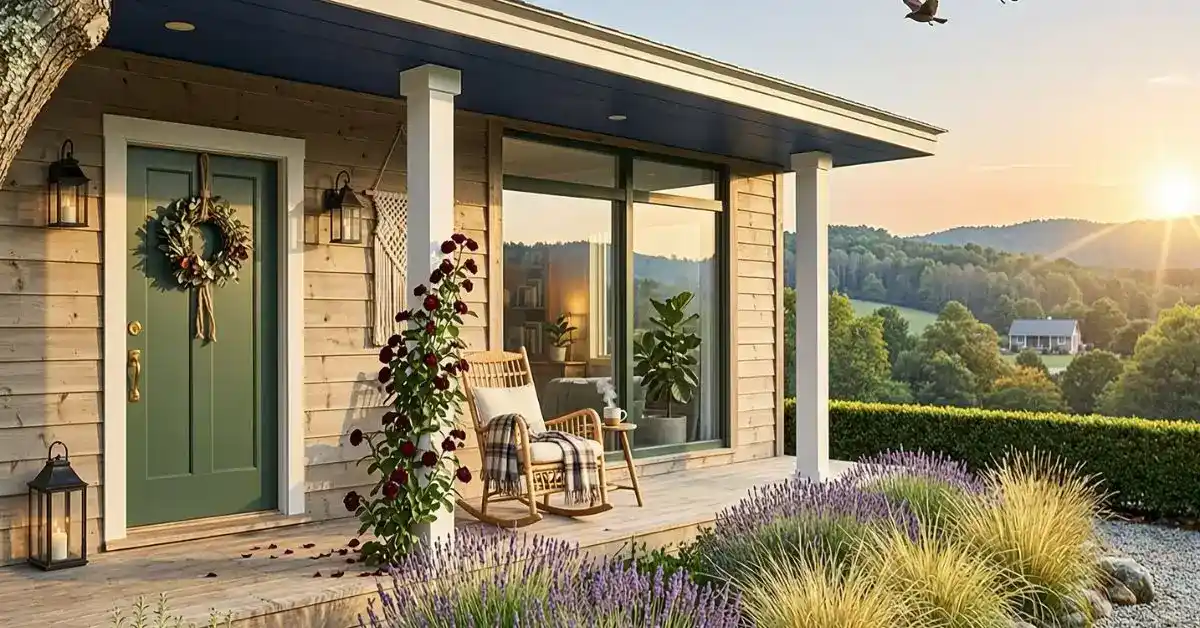
Paint the front door. A fresh coat of paint on the front door is one of the highest return-on-investment home improvements available. A bold color — navy, black, deep green, or red — makes a home look intentional and well-maintained. Paint costs $30 to $50, and the project takes an afternoon.
Add outdoor lighting. Solar-powered pathway lights and a simple updated porch light fixture make an entry feel safer and more welcoming. Many porch light fixtures can be swapped out in under 30 minutes.
Create a functional inside entry zone. A hook for bags and coats, a small bench or shoe storage, and a place for keys reduces daily chaos significantly. Even in a small entryway, a simple $50 entryway organizer from a home goods store can replace the pile-up that happens at most front doors.
Home Improvement Ideas by Budget
| Budget Range | What You Can Realistically Do |
|---|---|
| Under $50 | Rearrange furniture, add plants, organize cabinets, buy new throw pillows |
| $50–$200 | New lighting, cabinet hardware, blackout curtains, bathroom mirror swap |
| $200–$500 | Area rug, faucet replacement, under-cabinet lighting, fresh paint in one room |
| $500–$1,500 | Multiple room refreshes, new fixtures, outdoor upgrades, storage solutions |
| $1,500+ | Larger renovations, flooring updates, kitchen or bathroom partial remodels |
Frequently Asked Questions
What are the easiest home improvements?
Paint walls, update lighting, replace cabinet hardware, and add an area rug. These affordable upgrades make a big visual difference.
How can I make a small room look bigger?
Use light colors, mirrors, properly sized furniture, vertical storage, and layered lighting while keeping clutter to a minimum.
What home improvements add the most value?
Kitchen and bathroom updates, fresh paint, curb appeal, and modern lighting typically offer the best return on investment.
How do I start improving my home?
Begin with one room and one priority. Focus on the biggest problem first, then work through projects based on budget and impact.
Are expensive home décor items worth it?
Invest in items you use daily, like sofas, mattresses, and rugs. Save money on decorative accessories and accent pieces.